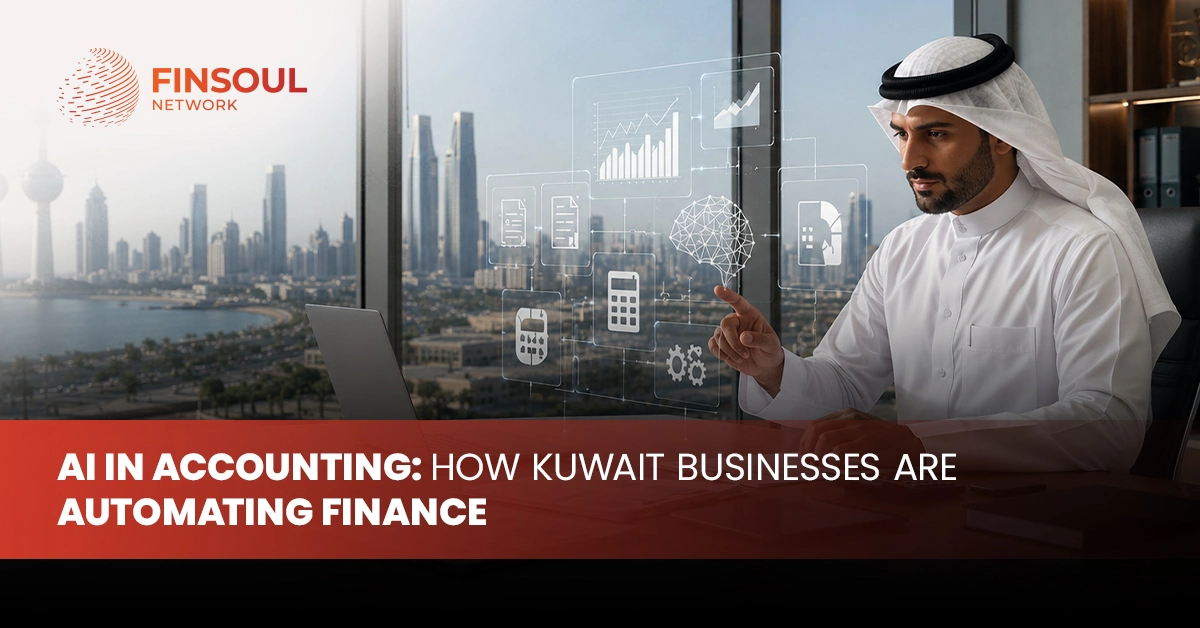

AI in Accounting: How Kuwait Businesses Are Automating Finance
Finance teams across Kuwait are under more pressure than ever to close books faster, catch errors before they become costly, and give leadership numbers they can actually trust. That pressure is exactly why AI in Accounting has moved from a buzzword to a real business decision for companies of every size. What used to take a bookkeeper an entire afternoon can now be done in minutes, and what used to slip through the cracks during manual review is now flagged before it ever reaches a manager’s desk.
This shift isn’t happening in some distant future. It’s happening right now, in local firms, retail chains, and service companies across Kuwait that are quietly rebuilding their finance departments around smarter tools. In this article, we’ll look at what this technology actually means, why Kuwaiti businesses are adopting it, which tasks it can take off your plate, and what it takes to implement it well.
What Is AI in Accounting?
At its core, this approach refers to the use of machine learning and pattern recognition to handle financial tasks that used to require constant human attention. Instead of an employee manually keying in every invoice line or matching bank statements by eye, the software learns from past transactions and starts recognizing patterns on its own. It can categorize expenses, flag unusual entries, and even predict cash flow trends based on historical data.This isn’t about replacing accountants. It’s about giving them tools that handle repetitive work so they can focus on analysis, strategy, and advising the business owners they work with.
How AI differs from traditional accounting software
Traditional accounting software follows rules you set. If you tell it that every expense under a certain category goes to a specific account, it will do that every single time, correctly or not, without questioning anything. AI-driven tools go a step further. They learn from corrections, adjust to new patterns, and get smarter the longer they’re used. A traditional system needs to be told what to do. An AI system starts to figure some of it out on its own.
Why Are Kuwait Businesses Adopting AI in Accounting?
Increasing demand for efficiency
Kuwaiti companies, especially those juggling multiple branches or a growing client base, simply don’t have the bandwidth to process everything by hand anymore. Finance teams are being asked to do more with the same headcount, and automation is one of the few realistic ways to keep up without burning out staff.
Improving financial accuracy
Manual data entry is one of the biggest sources of errors in any finance department. A misplaced decimal or a duplicated invoice can throw off an entire month’s reporting. These tools reduce this risk significantly by cross-checking entries automatically and catching inconsistencies that a tired employee might miss at the end of a long day.
Strengthening financial compliance and reporting
Kuwait’s regulatory environment continues to tighten, and businesses need clean, well-documented records to stay compliant. Automated systems keep a clear audit trail of every transaction, which makes reporting season far less stressful and reduces the chance of penalties tied to missing or inconsistent documentation.
Which Accounting Processes Can AI Automate?
Bookkeeping and data entry
This is usually the first place companies start. Instead of manually entering receipts and invoices, AI tools can scan documents, extract the relevant data, and post it directly into the ledger.
Invoice processing and accounts payable
AI can read incoming invoices, match them against purchase orders, and route them for approval automatically, cutting down the days it usually takes to process a single payment.
Accounts receivable and payment tracking
Instead of someone checking spreadsheets to see who hasn’t paid, automated systems track outstanding balances and send reminders on their own, which noticeably speeds up collections.
Bank reconciliation
Matching bank statements to internal records used to eat up hours every month. AI tools now do this comparison automatically and only flag the transactions that genuinely need a human look.
Payroll management
Salary calculations, deductions, and government contributions can all be processed automatically, with the system adjusting for overtime, leave, and bonuses without someone re-running formulas by hand.
Expense tracking
Employees can snap a photo of a receipt, and the system categorizes the expense, checks it against company policy, and logs it, no spreadsheet required.
Financial reporting and forecasting
Rather than waiting until month end to understand where the business stands, AI tools generate reports in real time and can project future performance based on current trends.
Tax preparation and compliance support
Automated systems help organize the documentation needed for tax filings and flag potential compliance issues well before deadlines arrive, which takes a lot of the last-minute panic out of tax season.
What Are the Benefits of AI in Accounting?
Faster financial processes
Tasks that once took days can be completed in hours or even minutes, freeing up staff to focus on higher-value work.
Reduced human errors
Automated checks catch mistakes before they turn into bigger problems down the line, which protects both accuracy and reputation.
Better cash flow management
With real-time visibility into receivables, payables, and spending patterns, business owners can make faster decisions about where money needs to go next.
Lower operating costs
Less time spent on manual tasks means fewer resources needed to handle the same workload, which adds up significantly over a year.
Improved business decision-making
When the numbers are accurate and available instantly, leadership can react to problems and opportunities without waiting for the finance team to catch up.
What Challenges Do Businesses Face When Implementing AI?
Data security and privacy
Financial data is sensitive, and moving it into new systems raises valid concerns about who can access it and how it’s protected. Choosing a provider with strong security practices matters more than most people realize.
Integrating AI with existing accounting systems
Not every AI accounting software connects smoothly with older platforms already in use. Some businesses need custom integration work before the transition is smooth.
Employee training and adoption
New tools only help if the team actually uses them properly. Some employees are hesitant to trust automated systems, especially if they’ve worked with spreadsheets for years.
Initial implementation costs
Setting up new software, migrating data, and training staff all cost money upfront, even though the long-term savings usually outweigh that initial investment.
How Can Businesses Successfully Implement AI in Accounting?
Assess your current accounting processes
Before adopting anything new, take a close look at where your finance team spends the most time and where mistakes tend to happen most often.
Identify tasks suitable for automation
Not everything needs to be automated right away. Start with repetitive, high-volume tasks like data entry or invoice matching before moving to more complex processes.
Choose the right AI-powered accounting software
There’s no one-size-fits-all solution here. The right platform depends on your industry, company size, and existing systems. This is where working with a trusted partner like Finsoul Network Kuwait can make a real difference, since matching the right tool to your business is often harder than it looks.
Train your finance team
Even the best software fails if nobody knows how to use it properly. Hands-on training and ongoing support help staff feel confident rather than replaced.
Monitor performance and continuously improve
Implementation isn’t a one-time event. Regularly reviewing how the system performs, and adjusting settings or workflows as needed, keeps things running smoothly long after launch.
What Is the Future of AI in Accounting?
Predictive financial analytics
Future systems will move beyond reporting what already happened and start reliably predicting cash shortfalls, revenue dips, or spending spikes before they occur.
Intelligent automation
Expect even fewer manual touchpoints, with systems handling entire workflows from invoice receipt to payment without anyone needing to step in unless something looks off.
AI-assisted financial decision-making
Rather than just crunching numbers, future tools will start offering actual recommendations, suggesting where to cut costs or where cash is being tied up unnecessarily.
For businesses in Kuwait looking to stay ahead of these changes, working with Finsoul Network Kuwait offers a practical starting point. Whether you’re exploring cloud accounting for the first time or looking to modernize an outdated system entirely, having the right guidance makes the transition far less overwhelming. Many companies also turn to Finsoul Network Kuwait because it functions as both a knowledgeable AI automation company in Kuwait and a provider of dependable Accounting Services in Kuwait, which means you’re not juggling multiple vendors to get where you need to be.
Frequently Asked Questions
Is AI in Accounting only for large companies?
No. Small and mid-sized businesses often see the biggest relative time savings, since they typically have smaller teams handling a large volume of repetitive work.
Will AI replace accountants in Kuwait?
Unlikely. It changes what accountants spend their time on, shifting focus toward analysis and advisory work rather than manual data entry.
How long does it take to implement automated finance tools?
This depends on company size and existing systems, but most businesses can expect a phased rollout over a few weeks to a few months.
Is my financial data safe with AI-powered systems?
Reputable providers use strong encryption and access controls, but it’s important to vet any vendor’s security practices before signing on. Working with an established name like Finsoul Network Kuwait can help ease that concern, since data protection is built into how they set up and manage client systems from the start.
What’s the first step to getting started?
Start small. Look at one or two repetitive tasks in your finance department and explore automating those before rolling out a company-wide system.
Table of Contents
Book An Appointment
No Comments
Recent Blogs