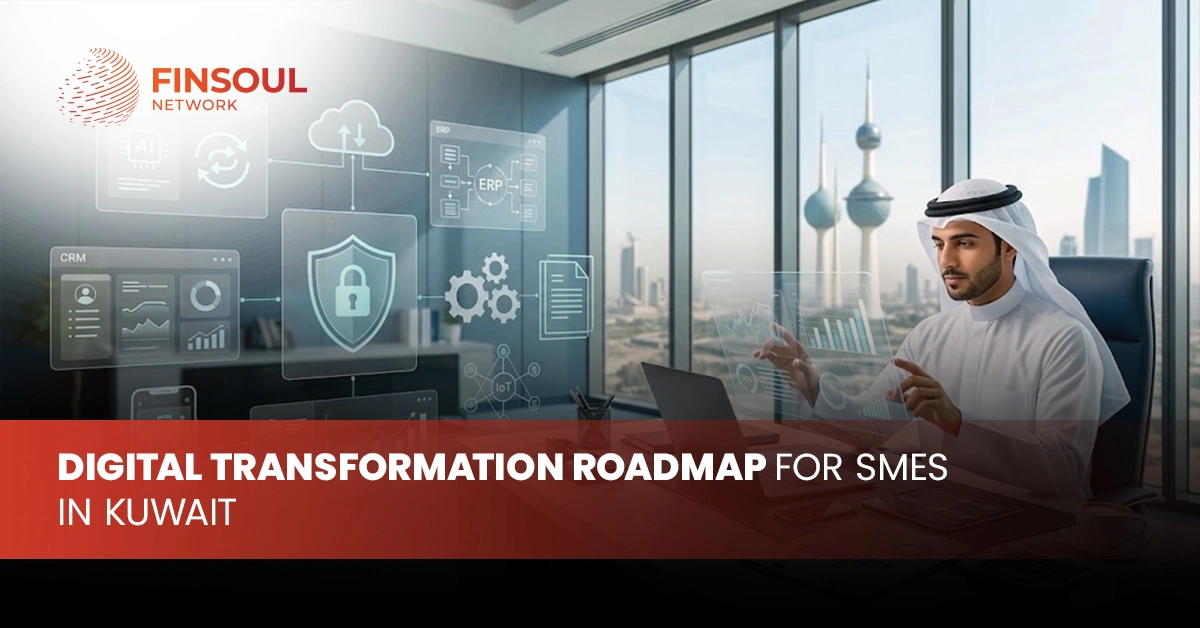

Digital Transformation Roadmap for SMEs in Kuwait
Small and medium businesses across Kuwait are facing a market that looks nothing like it did five years ago. Customers expect instant responses, competitors are moving online faster, and businesses still relying on paper trails and manual spreadsheets are starting to feel it. This is why so many owners are turning to digital transformation consulting, not as a trend to follow but as a practical way to stay relevant and competitive.
The tricky part isn’t deciding whether to modernize, most owners already know they need to. The real challenge is figuring out where to start without wasting money on tools that don’t fit the business. That’s what this roadmap, put together with input from Finsoul Network Kuwait, covers: why SMEs in Kuwait are making this shift, what a solid plan usually includes, which technologies matter most, and how to get through the rough patches without losing momentum.
What Is Digital Transformation for SMEs?
A lot of people hear “digital transformation” and think of new software. That’s part of it, but not the whole picture. Real transformation means rethinking how the business operates, how decisions get made, and how information moves between teams. Buying a new accounting tool without changing the habits around it isn’t transformation, it’s just a tool sitting on top of old problems.
Why digital transformation matters for small and medium businesses
Larger companies usually have the budget to absorb inefficiency. SMEs don’t have that luxury. A slow process or a miscommunication between departments costs a small business proportionally more than a large one. That’s why many turn to digital transformation consulting rather than figuring it all out through trial and error.
Why Are SMEs in Kuwait Embracing Digital Transformation?
Increasing competition in the Kuwait market
New businesses are entering nearly every sector, many built digital-first from day one. SMEs that don’t modernize risk losing ground to leaner competitors who move faster.
Improving operational efficiency
Manual processes eat up time that could go toward growth. Automating tasks like invoicing or inventory tracking frees staff to focus on what moves things forward.
Meeting changing customer expectations
Customers in Kuwait now expect to book, pay, and communicate digitally, often without speaking to a person. Businesses that can’t offer that start to look outdated.
Making faster data-driven decisions
Owners who rely on gut feeling alone are at a disadvantage against those who can pull up real numbers in seconds.
What Are the Key Stages of a Digital Transformation Roadmap?
Assessing your current business processes
Before changing anything, it’s worth mapping out how things currently work. This step alone often reveals bottlenecks owners didn’t realize were slowing things down.
Defining digital transformation goals
Vague goals like “modernize the business” don’t lead anywhere useful. Specific goals, like cutting invoice processing time in half, give the whole effort direction.
Selecting the right technologies
This is where a lot of businesses go wrong, picking tools based on what’s popular rather than what solves their specific problems. Working with someone who offers proper digital transformation consulting instead of just selling software tends to prevent this, since the right fit depends on the business, not on what a competitor happens to use.
Implementing digital solutions
Rolling out new systems works best in phases rather than all at once. A gradual rollout gives staff time to adjust and lets leadership fix issues before they spread across the operation.
Measuring results and improving continuously
Transformation doesn’t end at launch. Results need to be tracked against the goals set earlier, with adjustments made as real usage shows what’s working.
Which Technologies Should Kuwait SMEs Adopt?
Cloud computing for flexible business operations
Cloud-based systems let teams access data and tools from anywhere, which matters with hybrid work becoming the norm across many Kuwaiti industries.
Enterprise resource planning (ERP) systems
An ERP system pulls finance, inventory, sales, and operations into one place instead of scattering information across spreadsheets.
Artificial intelligence and automation
AI-driven tools can handle repetitive tasks like data entry, customer inquiries, and reporting, cutting down the manual workload.
Data analytics and business intelligence
Analytics tools turn raw numbers into something usable, helping owners spot trends before they become problems or opportunities before they’re missed.
Cybersecurity solutions
As more of the business moves online, protecting customer data and internal systems becomes non-negotiable.
Digital customer management platforms
CRM tools help businesses track every customer interaction, which makes follow-ups and sales far more consistent than relying on memory or scattered notes.
How Can SMEs Build a Successful Digital Transformation Strategy?
Identify business challenges before investing in technology
Buying tools before understanding the actual problem almost always wastes money. Technology should follow the challenge, not the other way around.
Prioritize solutions based on business needs
Not every tool needs adopting at once. Ranking needs by impact helps businesses spend their budget where it counts.
Create a realistic implementation timeline
Rushing a rollout usually backfires. A realistic timeline leads to smoother adoption and fewer costly mistakes.
Train employees for digital adoption
New systems fail when staff don’t know how to use them properly. Training isn’t a nice extra, it’s part of the implementation itself.
What Are the Benefits of Digital Transformation for SMEs in Kuwait?
Reducing operational costs
Automating manual work reduces the hours spent on repetitive tasks, which adds up to real savings over time.
Improving productivity and efficiency
Teams get more done when they’re not stuck re-entering data or chasing information across disconnected systems.
Enhancing customer experience
Faster response times and smoother digital interactions leave customers with a noticeably better impression.
Increasing business scalability
Digital systems make it easier to grow without hiring proportionally more staff for every new customer.
Improving decision-making with real-time insights
Owners no longer have to wait until month end to understand how the business is actually performing.
What Challenges Do SMEs Face During Digital Transformation?
Smaller businesses can’t invest in everything at once, so choices have to be made carefully.
Resistance to technology changes
Long-time employees sometimes resist new systems, especially if they’ve relied on the same processes for years.
Lack of technical expertise
Many SMEs don’t have in-house staff who understand how to select, implement, or maintain new digital systems.
Data security concerns
Moving operations online raises legitimate concerns about who can access sensitive business and customer information.
How Can SMEs Overcome Digital Transformation Challenges?
Start with high-impact digital initiatives
Rather than fixing everything at once, tackling the one or two changes with the biggest impact builds momentum and confidence.
Partner with experienced technology providers
Working with a provider who understands SME needs, rather than a generic vendor, makes a real difference in how smoothly things go. This is the kind of support Finsoul Network Kuwait provides through hands-on digital transformation consulting, helping SMEs figure out what matters before spending a single dinar on new tools.
Adopt scalable solutions
Choosing systems that can grow alongside the business avoids ripping everything out and starting over a few years down the line.
Develop a digital-first workplace culture
Technology only sticks when people actually believe in it. Building that mindset across the team matters just as much as the tools themselves.
What Is the Future of Digital Transformation for SMEs in Kuwait?
Greater adoption of AI and automation
More SMEs will lean on automation not just for back-office tasks but for customer-facing interactions too, from chat support to personalized recommendations.
Growth of cloud-based business solutions
Cloud adoption will likely keep expanding as more providers solutions specifically to smaller businesses rather than enterprise-only pricing.
More intelligent and connected business operations
Systems will increasingly talk to each other automatically, cutting down the manual work of moving data between platforms that don’t currently communicate.Different sectors are already seeing what this looks like in practice. Hospitals exploring digital transformation in healthcare are streamlining patient records, while companies working on digital transformation in logistics use real-time tracking to cut delays. Even traditional sectors like digital transformation in oil and gas are investing in monitoring and automation to improve safety and output. The common thread is simple: businesses that plan carefully see far better results than those that adopt technology piecemeal.
For SMEs trying to figure out where they fit into all this, working with a partner who understands the local market makes the process far less overwhelming. Finsoul Network Kuwait works directly with business owners to map out a plan that fits their actual size, budget, and goals, rather than pushing a generic package that looks good on paper. Many businesses come to Finsoul Network Kuwait already knowing they need better financial systems but unsure where hr digital transformation fits in, and that clarity is often the biggest first step.
Frequently Asked Questions
Why is digital transformation important for SMEs in Kuwait?
It helps smaller businesses compete with larger companies and digital-first competitors by improving efficiency, cutting costs, and meeting customer expectations that have shifted toward online interaction.
How much does digital transformation cost for SMEs?
Costs vary depending on the technologies chosen and how much of the business needs to change. Starting with a clear plan, rather than buying tools piecemeal, keeps costs more predictable.
Which technology should SMEs implement first?
This depends on where the business is losing the most time or money, which is usually the first thing good digital transformation consulting looks at. For many SMEs, that’s financial systems or customer management, since both affect nearly every part of daily operations.
How long does digital transformation take?
Timelines depend on business size and goals, but most SMEs see results within a few months of a phased rollout. Consulting digital transformation companies in Kuwait can help identify the right starting point.
Table of Contents
Book An Appointment
No Comments
Recent Blogs