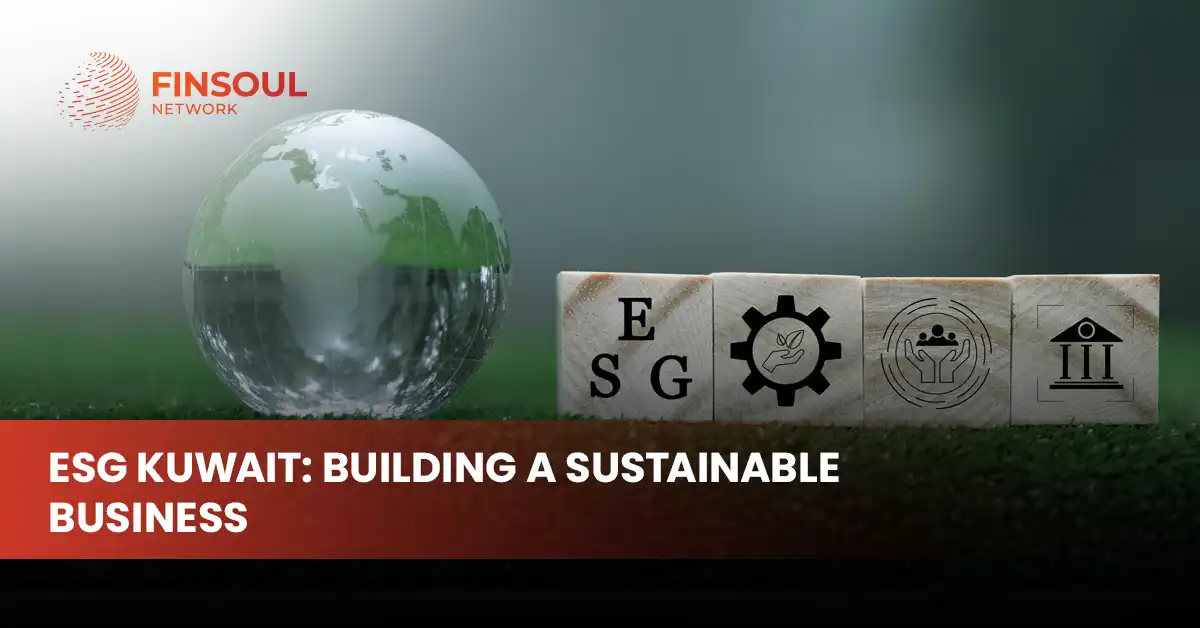
ESG Kuwait: Building a Sustainable Business
Kuwait’s corporate world is waking up to a reality that global markets have understood for years. Businesses that ignore environmental responsibility, social accountability, and governance standards are not just falling behind ethically they are falling behind competitively. Investors are redirecting capital. Regulators are tightening frameworks. Customers and employees are demanding more. If your business in Kuwait has not yet built a clear ESG strategy, the cost of delay is rising every quarter.
At Finsoul Network Kuwait, we work with businesses across Kuwait that are navigating this shift. What we see consistently is that ESG Kuwait is not about ticking compliance boxes. It is about building a business that is structurally stronger, financially more attractive, and operationally more resilient for the long term.
The Problem: ESG Is No Longer Optional for Kuwait Businesses
For years, ESG was treated as a concern for multinational corporations or Western markets. Kuwait businesses could observe from a distance. That era is over.
The Gulf Cooperation Council is accelerating its sustainability agenda. Kuwait’s own development vision emphasizes environmental stewardship and governance modernization. Regional and international investors applying Responsible investing criteria are now filtering out companies that cannot demonstrate measurable commitments across environmental, social, and governance dimensions.
The problem is not awareness. Most business leaders in Kuwait understand that ESG matters. The problem is translating a global framework and building something practical, measurable, and credible within the specific context of Kuwait’s business environment.
Without a structured approach, ESG becomes a marketing exercise rather than a management discipline. And sophisticated investors, regulators, and partners can tell the difference immediately.
The Stakes: What Happens When ESG Is Ignored
The consequences of ignoring ESG Kuwait requirements are becoming harder to absorb.
Access to capital is narrowing. International institutional investors, sovereign wealth funds, and development finance institutions now apply formal ESG investing screens before committing capital. A Kuwait business without a credible ESG framework is invisible to a growing pool of the most valuable investors in the world.
Regulatory exposure is increasing. Kuwait’s regulatory environment is evolving. Mandatory ESG reporting requirements are expanding across the GCC, and businesses that have not built reporting systems will face rushed, costly compliance exercises when deadlines arrive.
Talent is choosing values-aligned employers. The next generation of Kuwait’s professional workforce considers workplace culture, environmental responsibility, and ethical governance when choosing employers. Businesses without credible ESG commitments will find recruitment and retention increasingly difficult.
Supply chain relationships are at risk. Major international corporations now require their Kuwait suppliers and partners to meet minimum ESG standards. Failing to qualify can cost significant commercial relationships.
The Solution: A Practical ESG Framework Built for Kuwait
The good news is that building a credible ESG Kuwait strategy does not require reinventing your entire business. It requires a structured approach across three interconnected pillars.
The Environmental Pillar ESG Environmental Responsibility
ESG environmental performance covers how your business manages its impact on the natural world. In Kuwait’s context, this includes energy consumption, water use, waste generation, and carbon emissions.
Practical steps for Kuwait businesses include conducting an energy audit of your facilities, setting measurable targets for reducing electricity and fuel consumption, establishing a waste reduction and recycling policy, and beginning to track and report Scope 1 and Scope 2 carbon emissions.
ESG environmental performance is often where businesses start because it produces tangible cost savings alongside compliance benefits. Reducing energy consumption, for example, directly improves margins while strengthening your environmental credentials.
The key is measurement. Without baseline data and consistent tracking, ESG environmental commitments are statements rather than strategies. Investors and regulators want evidence, not intentions.
The Social Pillar: People, Community, and Culture
The social dimension of ESG covers how your business treats its employees, engages with communities, and manages relationships across its supply chain.
For Kuwait businesses, this means building transparent HR policies, investing in employee development and wellbeing, establishing supplier codes of conduct, and contributing meaningfully to community development. It also means addressing diversity and inclusion honestly, including at leadership levels.
Social performance is increasingly scrutinized by institutional investors who understand that companies with strong workplace cultures outperform peers in productivity, retention, and innovation over time.
The Governance Pillar Structure, Accountability, and Ethics
Governance is the foundation on which ESG Kuwait performance is built. It covers board structure, management accountability, anti-corruption policies, financial transparency, and risk management frameworks.
Strong governance means having clear policies in place, leadership that is held accountable to those policies, and systems that make ethical breaches visible and consequential. For Kuwait businesses seeking to attract impact investing capital or expand into international markets, governance standards are often the first dimension evaluated.
A business with strong environmental commitments but weak governance will not achieve credible ESG standing. The three pillars are interconnected.
ESG Reporting: Turning Performance Into Credibility
Having an ESG strategy is necessary. Being able to demonstrate it credibly through sustainability reporting is what converts that strategy into a competitive advantage.
Sustainability reporting involves systematically measuring, documenting, and communicating your performance across environmental, social, and governance dimensions. The most widely recognized reporting frameworks globally include GRI (Global Reporting Initiative), SASB (Sustainability Accounting Standards Board), and the TCFD framework for climate-related financial disclosures.
For Kuwait businesses, starting with a materiality assessment is the right first step. This identifies which ESG issues are most significant for your specific industry, stakeholder base, and operational footprint. From there, a reporting structure can be built that is both manageable for your team and credible for your audience.
Sustainability reporting does not need to be perfect in its first iteration. What matters is that it is honest, consistent, and progressively improving. Investors and stakeholders respond well to businesses that demonstrate a genuine journey, not just a polished annual statement.
ESG Operations: Embedding Sustainability Into How You Work
Strategy documents and annual reports only create value if ESG principles are embedded into sustainable operations and the day-to-day decisions, processes, and behaviors that define how your business actually runs.
Sustainability integration means building sustainability considerations into procurement decisions, facilities management, employee onboarding, product development, and vendor selection. It means ESG metrics appear in management dashboards alongside financial metrics. It means leadership is evaluated in part on ESG performance, not just revenue and margins.
Businesses that treat sustainability initiatives as a parallel workstream separate from core business management rarely achieve meaningful progress. Businesses that integrate ESG into operational decision-making at every level build something genuinely durable.
Practical integration steps include appointing an internal ESG lead or working with an external advisor, embedding ESG criteria into supplier evaluation processes, building ESG metrics into management reporting, and conducting regular internal reviews of progress against targets.
ESG Investing and Kuwait’s Capital Market Opportunity
One of the most compelling business cases for building strong ESG Kuwait credentials is the expanding universe of Responsible investing capital available to qualifying businesses.
Global sustainable investment assets exceeded USD 30 trillion in recent years and continue to grow. The GCC region specifically is attracting increasing flows from global institutional investors who apply ESG screens. Kuwait’s position as a significant economy with an expanding private sector makes it a natural target for this capital, but only for businesses that can demonstrate credible ESG frameworks.
ESG investing is not a niche anymore. Mainstream asset managers, pension funds, sovereign wealth funds, and private equity firms all apply ESG criteria as part of standard investment analysis. For Kuwait businesses seeking growth capital, international partnerships, or public market opportunities, ESG readiness is now a prerequisite rather than a differentiator.
Building Your ESG Kuwait Strategy: Where to Start
The most common barrier to starting is not commitment; it is knowing where to begin. Here is a practical starting sequence for Kuwait businesses.
- Step one is conducting a baseline ESG assessment. Understand where your business currently stands across environmental, social, and governance dimensions before setting targets or building systems.
- Step two is identifying your material ESG issues. Not every ESG topic applies equally to every business. A materiality assessment focuses your energy where it genuinely matters for your stakeholders and industry.
- Step three is setting measurable targets. Credible ESG commitments are specific, time-bound, and measurable. Vague aspirations do not satisfy investors or regulators.
- Step four is building your reporting infrastructure. Decide which ESG reporting framework is most appropriate, establish data collection processes, and assign clear accountability for reporting.
- Step five is integrating ESG into your ESG operations. Embed ESG criteria into procurement, HR, facilities, and management reporting so that performance improves organically over time.
Conclusion:
The businesses that will define Kuwait’s commercial landscape in the next decade are not waiting for regulators to force their hand. They are building ESG frameworks now, voluntarily, because they understand the financial, reputational, and operational advantages that come with genuine sustainability leadership.
ESG Kuwait is not a cost center. It is a strategic investment in the long-term resilience and attractiveness of your business. Every step taken on environmental performance, social accountability, and governance quality makes your business more valuable to investors, more appealing to talent, and more resilient to regulatory change.
Finsoul Network Kuwait supports businesses across every stage of this journey, from initial ESG assessments and materiality analysis to Sustainability Reporting framework development and ESG operations integration. If your business is ready to build something that lasts, ESG is where that journey begins.
Frequently Asked Questions
What does ESG mean and why does it matter for businesses in Kuwait?
ESG stands for Environmental, Social, and Governance. It helps businesses manage sustainability, social responsibility, and ethical practices. In Kuwait, strong ESG performance builds investor trust, supports compliance, and encourages long-term growth.
Is ESG reporting mandatory for Kuwait companies?
ESG reporting requirements are growing across the GCC. While not mandatory for all Kuwait companies yet, adopting ESG reporting helps businesses prepare for future regulations and meet investor expectations.
How does ESG investing affect Kuwait businesses seeking capital?
Investors increasingly consider ESG performance before providing funding. Strong ESG practices improve access to capital, enhance credibility, and support business growth.
What is the difference between ESG strategy and ESG operations?
An ESG strategy defines sustainability goals, while ESG operations focus on applying those goals through daily business activities, policies, and processes.
How long does it take for a Kuwait business to build a credible ESG framework?
Most businesses can develop a basic ESG framework within 6–12 months, including assessments, data collection, targets, and reporting processes.
Table of Contents
Book An Appointment
No Comments
Recent Blogs