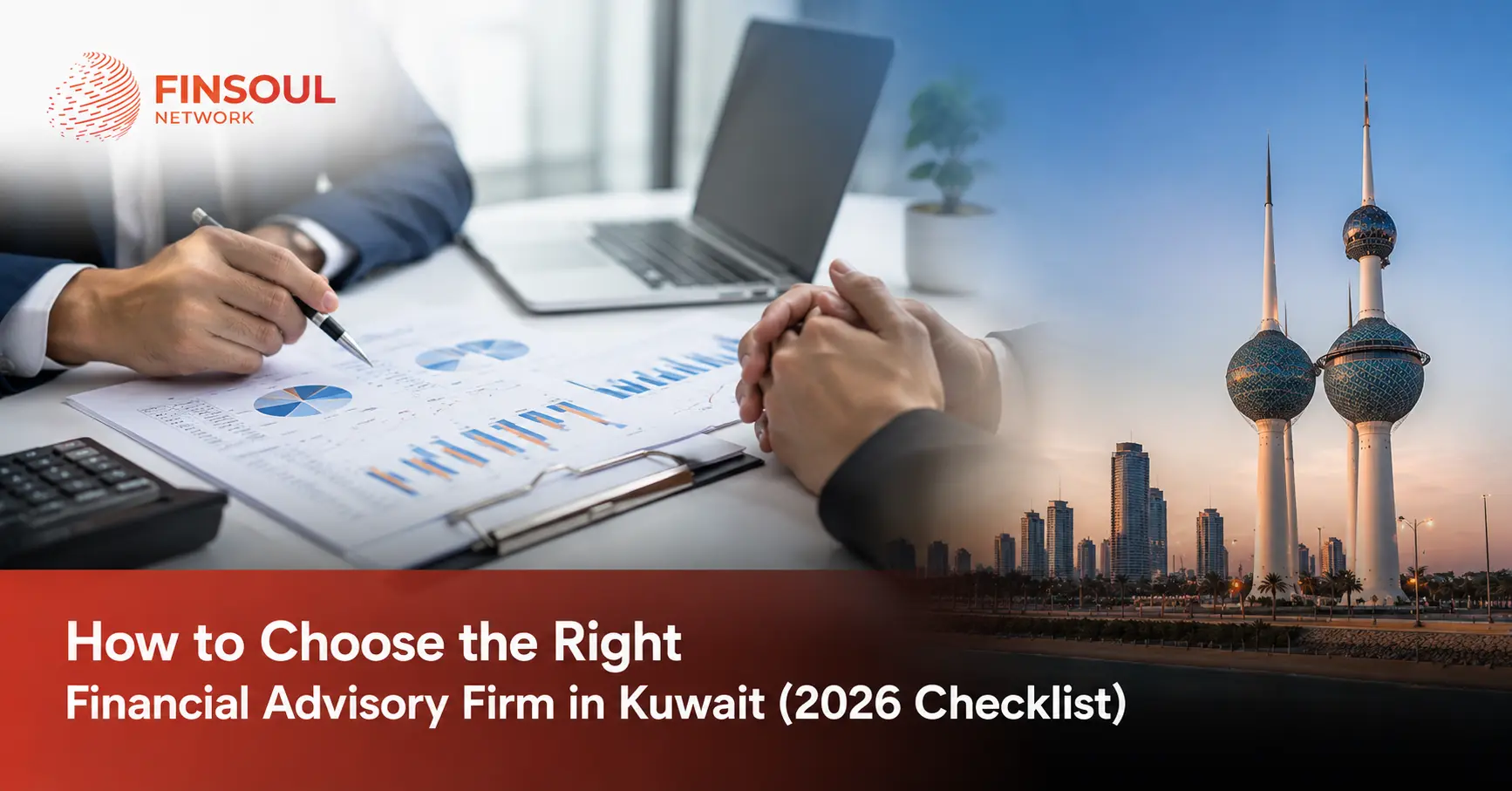
How to Choose the Right Financial Advisory Firm in Kuwait (2026 Checklist)
Choosing the right Financial Advisory Firm in Kuwait is one of the most important business decisions you will make this year. Whether you are a startup finding your financial footing or an established enterprise planning your next growth phase, the firm you partner with will directly shape your financial health, compliance standing, and long-term profitability.
Why Choosing the Right Financial Advisory Firm Matters for Businesses in Kuwait:
Kuwait’s business environment has grown significantly more complex over the past few years. VAT considerations, Vision 2035 economic reforms, evolving Central Bank of Kuwait regulations, and increasing cross-border investment activity mean that businesses can no longer afford to work with a generalist or an underqualified advisor.
A qualified Financial Advisory Firm does more than file reports and balance books. It helps you structure capital efficiently, manage risk proactively, and make decisions backed by accurate financial data. The wrong firm, on the other hand, can leave you exposed to compliance failures, missed opportunities, and costly financial errors.
Table of Contents
The 2026 market also demands advisors who understand digital financial tools, ESG reporting requirements, and sector-specific dynamics unique to Kuwait. Your advisory partner needs to be current, qualified, and genuinely invested in your business outcomes.
The 2026 Checklist for Choosing a Financial Advisory Firm in Kuwait:
Use this checklist as your decision-making framework. Each point reflects what separates a capable advisory firm from a mediocre one in today’s Kuwait market.
Verify Professional Qualifications and Industry Experience:
Start by checking the credentials of the firm and the individual advisors who will handle your account. Look for internationally recognised qualifications such as CFA (Chartered Financial Analyst), CPA (Certified Public Accountant), ACCA, or CMA. These certifications signal that your advisor has met a rigorous standard of financial knowledge and ethics.
Experience matters as much as qualifications. A firm with ten or more years operating in Kuwait will have multiple economic cycles, regulatory shifts, and market conditions. Ask directly how long they have been operating in Kuwait and what types of clients they have served.
Assess Their Understanding of Kuwait's Regulatory Environment:
Kuwait has its own distinct regulatory landscape. Your advisory firm must have working knowledge of the Capital Markets Authority (CMA), the Central Bank of Kuwait (CBK), the Kuwait Ministry of Commerce and Industry requirements, and Zakat and tax obligations for businesses operating in the region.
A firm that speaks confidently and specifically about these frameworks is one that operates within them regularly. Avoid firms that give vague answers about compliance or refer you to a third party for basic regulatory guidance.
Review Their Range of Financial Advisory Services:
A capable firm offers a full spectrum of services under one roof. Business Financial Consulting in Kuwait should cover financial planning, budgeting, forecasting, investment advisory, risk management, mergers and acquisitions support, and corporate restructuring.
When a firm covers this range, you avoid the inefficiency of working with multiple vendors and the risk of advice that does not align across functions. Ask for a full service list and confirm which services are delivered in-house versus outsourced.
Evaluate Experience in Your Industry Sector:
Financial advisory is not one-size-fits-all. A firm that primarily serves oil and gas companies may not be the best fit for a retail group or a healthcare provider. Kuwait’s economy spans several distinct sectors, and each carries unique financial, regulatory, and operational considerations.
Ask the firm to share examples of clients they have served in your specific industry. If they have worked with businesses at your scale and in your sector, they will bring relevant insight, not just generic financial advice.
Examine Their Track Record and Client Portfolio:
Past performance is a reliable indicator of future capability. Ask for client references, case studies, or anonymised examples of outcomes they have delivered. Strong Financial Management Services providers will have documented results, whether that is improved cash flow management, successful fundraising, or clean audit outcomes.
Pay attention to how long their clients typically stay with them. Long-term client relationships signal consistent value delivery. High turnover should prompt further questions.
Assess Technology, Reporting, and Data Analytics Capabilities:
In 2026, financial advisory without strong technology is outdated. Your firm should use modern accounting and financial management platforms, offer real-time or near-real-time reporting dashboards, and have the ability to analyse large data sets to surface meaningful insights.
Ask what software they use, how reports are delivered, and how quickly you can access updated financial data when you need it. A firm still relying on manual spreadsheets and monthly PDF reports is not keeping pace with what Kuwait’s competitive business environment demands.
Review Communication and Client Support Standards:
Financial issues rarely follow a convenient schedule. You need a firm that is accessible, responsive, and proactive in keeping you informed. Before signing any engagement, clarify how communication works: who is your primary point of contact, what is the expected response time, and how often will you receive formal updates?
Strong Financial Planning Services providers schedule regular strategy reviews, not just annual check-ins. They reach out when they spot a risk or opportunity, rather than waiting for you to call them with a problem.
Compare Fee Structures and Engagement Models:
Transparency in pricing is a mark of a professional firm. Some firms charge a flat retainer, others bill by the hour, and some work on a project basis. Each model has its place depending on what you need.
What matters most is that the fee structure is clearly explained, fully documented, and aligned with the scope of work. Hidden charges, vague billing descriptions, or pressure to commit to long-term contracts before delivering initial value are all signs to walk away.
Red Flags to Watch for When Selecting a Financial Advisory Firm:
Not every firm that claims expertise in financial consulting firms actually delivers it. Watch for these warning signs:
| Red Flag | What It Means for Your Business |
|---|---|
| Vague Credentials | The firm cannot name specific qualifications or regulatory bodies they work with, signalling a lack of verified expertise. |
| No Kuwait-Specific Experience | They rely on generic regional knowledge rather than Kuwait market expertise, leaving your business exposed to local compliance gaps. |
| Unclear Scope of Work | Proposals are broad and non-specific about deliverables, making it difficult to hold them accountable. |
| Poor Communication in Early Interactions | If they are slow or unclear before you hire them, response standards are unlikely to improve once you become a client. |
| Pressure Selling | Pushing you to sign quickly or discouraging you from comparing other firms indicates they cannot compete on merit. |
| No Verifiable Client References | They cannot provide documented outcomes or willing referees, making their track record difficult to verify. |
| Outdated Technology | No mention of digital tools, dashboards, or modern reporting systems suggests you may receive slow and unreliable financial data. |
| One-Person Operations for Complex Needs | A solo advisor cannot effectively manage the financial, compliance, and strategic requirements of a growing business. |
Why Choose Finsoul Network Kuwait as Your Financial Advisory Partner:
Choosing the right financial advisory partner can make a significant difference to your business growth and compliance success. Finsoul Network Kuwait combines local market expertise with practical financial solutions to the needs of businesses operating in Kuwait.
Deep understanding of Kuwait’s business and regulatory environment
Experienced financial advisors and business consultants
Transparent pricing with clearly defined deliverables
Fast response times and dedicated client support
Data-driven insights for better financial decision-making
Modern reporting tools and digital financial management solutions
Customized strategies for startups, SMEs, and established companies
Long-term support focused on sustainable business growth
Whether you need financial advisory services, business planning, budgeting, or strategic guidance, Finsoul Network Kuwait helps your business make informed decisions with confidence.
Conclusion:
Selecting the right Financial Advisory Firm in 2026 requires more than checking a price list and reading a website. It demands due diligence across qualifications, regulatory knowledge, sector experience, technology capability, and client service standards. The checklist in this guide gives you a structured way to evaluate every firm you consider.
Finsoul Network Kuwait works with businesses across Kuwait to deliver financial advisory that is specific, qualified, and results-focused. Our advisors bring deep knowledge of Kuwait’s regulatory environment, cross-sector experience, and modern reporting capabilities to every client engagement.
Ready to Partner with the Right Financial Advisory Firm?
Choosing the right financial advisory firm can make a significant difference to your company’s financial performance, compliance, and long-term growth. Contact Finsoul Network Kuwait today to discuss your business needs and discover how our experienced advisors can help you make smarter financial decisions with confidence.
Office Address: [Oula Tower, Omar Ben Al Khattab St, Block 3, Al Mirqab, Kuwait City, Kuwait]
Email: [info@finsoulnetwork.com]
Phone: [+44 7494 154004]
FAQs
What are the key factors to consider when choosing a financial advisory firm?
Businesses should evaluate a firm’s qualifications, industry experience, regulatory knowledge, service offerings, technology capabilities, and client support standards before making a decision.
How can I determine whether a financial advisory firm is qualified to support my business?
You can assess a firm’s qualifications by reviewing its professional certifications, years of experience, client portfolio, industry expertise, and understanding of local regulatory requirements.
What red flags should businesses watch for when selecting a financial advisory firm?
Common warning signs include unclear pricing, vague credentials, poor communication, lack of client references, limited industry experience, and outdated reporting systems.
Why is local regulatory knowledge important when choosing a financial advisory firm in Kuwait?
A firm with strong knowledge of Kuwait’s regulatory environment can help businesses maintain compliance, reduce financial risks, and adapt to changing legal and reporting requirements.
How can the right financial advisory firm contribute to long-term business success?
The right advisory partner helps businesses improve financial planning, manage risks, optimize resources, support strategic decision-making, and achieve sustainable growth over time.
No Comments
Recent Blogs