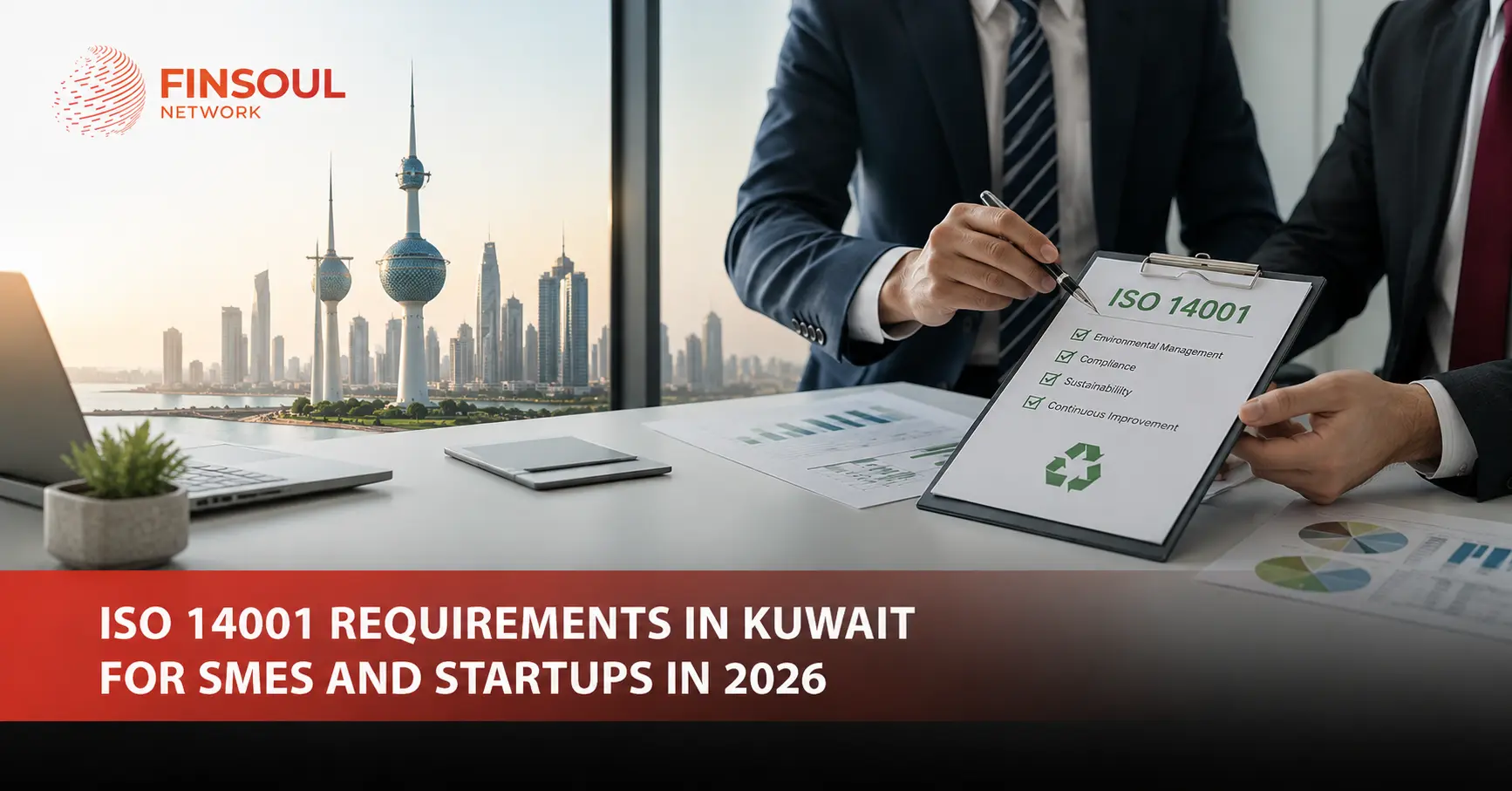
ISO 14001 Requirements in Kuwait for SMEs and Startups in 2026
Environmental responsibility has moved from a corporate goodwill gesture to a genuine business compliance requirement. Across the GCC, and particularly in Kuwait, the pressure on businesses to demonstrate credible environmental management practices is growing from multiple directions simultaneously. Regulators are tightening environmental standards, investors are demanding ESG compliance as a condition of funding, major procurement programmes are requiring certified environmental management frameworks, and customers are increasingly choosing suppliers who can demonstrate a genuine commitment to sustainability.
For SMEs and startups in Kuwait, this shift represents both a challenge and a significant opportunity. ISO 14001 certification in Kuwait provides the structured, internationally recognised environmental management framework that allows smaller businesses to meet these demands credibly, compete for government and corporate contracts, build investor confidence, and reduce the operational costs associated with poor environmental practice. Finsoul Network Kuwait explains exactly what ISO 14001 requires, why it matters in Kuwait’s specific business context, and how SMEs and startups can achieve and maintain certification efficiently.
What Is ISO 14001?
ISO 14001 is the internationally recognised standard for environmental management systems, published by the International Organization for Standardization.
Table of Contents
It provides organisations with a systematic framework for identifying, managing, monitoring, and improving their environmental performance on a continuous basis. The standard applies to businesses of every size and sector and is recognised by regulators, investors, procurement bodies, and corporate supply chains across more than 170 countries.
ISO 14001 certification in Kuwait demonstrates to all stakeholders that a business has implemented a verified environmental management system that meets internationally accepted standards, providing credibility and competitive advantage in a market where environmental expectations are rising rapidly.
Understanding ISO 14001:2015
ISO 14001:2015 is the current and definitive version of the standard, representing a significant evolution from its predecessor through its adoption of a risk-based approach to environmental management. Rather than simply prescribing a list of procedures to follow, ISO 14001:2015 requires organisations to understand their environmental context, identify the risks and opportunities most significant to their specific operations, set meaningful environmental objectives, and demonstrate continuous improvement against those objectives over time.
The 2015 version also introduced stronger requirements for leadership commitment, explicitly requiring top management to take an active role in the environmental management system rather than delegating responsibility entirely to an environmental manager. This shift reflects the recognition that effective environmental management must be embedded in business strategy, not isolated as a compliance function.
Why ISO 14001 Certification Matters in Kuwait
Kuwait’s environmental regulatory framework, combined with growing investor ESG expectations and procurement requirements, creates a compelling business case for ISO 14001 that goes well beyond environmental altruism:
Environmental regulations in Kuwait:
The Kuwait Environment Public Authority enforces environmental protection laws governing waste disposal, pollution control, industrial emissions, and environmental impact assessment. ISO 14001 demonstrates systematic compliance with these obligations and signals to KEPA t
ESG compliance pressure:
International investors, regional institutional funds, and large corporate procurement programmes increasingly require ESG disclosure and verified environmental management credentials. ISO 14001 certification is among the most recognised and credible ways to evidence the environmental pillar of an ESG programme.
Government and tender requirements:
Kuwait’s public procurement framework and major corporate supply chains in the oil and gas, construction, and infrastructure sectors are increasingly requiring ISO 14001 as a minimum qualification criterion. Without it, businesses are simply excluded from bidding regardless of their commercial capability.
Competitive advantage for SMEs and startups:
Certification distinguishes smaller businesses from uncertified competitors in markets where buyers are increasingly quality and compliance-conscious. For startups seeking to enter established supply chain.
Corporate reputation:
Environmental misconduct or compliance failures damage brand reputation in ways that are disproportionate to the underlying incident, particularly in the digital age. A certified environmental management system demonstrates proactive responsibility that protects reputation.
Who Needs ISO 14001 Certification in Kuwait?
While 14001 certification is beneficial for any business with environmental obligations, certain categories of organisations in Kuwait face the most direct and urgent need:
Manufacturing companies generating waste, emissions, or effluent require structured environmental controls that ISO 14001 provides. Construction businesses operating on sites with soil, water, and noise impact obligations benefit from certified management systems. Oil and gas contractors are subject to intense environmental scrutiny and typically face ISO 14001 requirements as standard tender qualification criteria. Logistics and transportation firms managing fuel consumption, emissions, and hazardous goods transportation need systematic environmental management.
Food and beverage businesses with waste management, water usage, and packaging impact obligations find certification valuable for regulatory and brand credibility. Healthcare facilities managing medical waste, chemical storage, and environmental compliance require robust management systems. SMEs and startups across all sectors that want to access larger buyers, government contracts, or investor funding increasingly need ISO 14001 as a baseline qualification. Export-oriented businesses supplying markets in Europe or internationally face environmental certification requirements from their customers as standard supply chain qualification criteria.
ISO 14001 Requirements for SMEs and Startups
The standard organises its requirements into seven operational clauses that together define what a compliant environmental management system must include:
Context of the Organisation
The business must identify the internal and external environmental factors relevant to its operations, understand the expectations of key stakeholders including regulators, customers, employees, and the community, and define the scope of its environmental management system clearly. For SMEs, this context-setting exercise often reveals environmental risks that were previously unrecognised and unmanaged.
Leadership Commitment
Top management must create and communicate a documented environmental policy, assign clear responsibilities for environmental management, and demonstrate active personal commitment to the environmental management system. Leadership that treats ISO 14001 as a documentation exercise rather than a genuine management commitment consistently fails to achieve or maintain certification.
Environmental Planning
The organisation must systematically identify its significant environmental aspects, which are the elements of its activities that interact with the environment, evaluate the associated impacts, identify compliance obligations under applicable law and stakeholder requirements, and set specific, measurable environmental objectives with action plans for achieving them.
Support Requirements
Adequate resources must be allocated to the environmental management system. Staff with environmental management responsibilities must be competent and trained. All employees whose work affects environmental performance must be aware of the organisation’s environmental policy, their personal responsibilities, and the consequences of non-compliance. Documentation must be controlled, current, and accessible.
Operational Controls
Specific controls must be implemented for all processes that create significant environmental impacts. This includes waste management procedures, resource consumption controls, emergency preparedness and response plans for environmental incidents, and requirements placed on suppliers and contractors whose activities affect the organisation’s environmental performance.
Performance Evaluation
Environmental performance must be monitored against objectives and legal obligations on an ongoing basis. Internal audits must be conducted at planned intervals to verify that the environmental management system is functioning as intended. Management must formally review the system’s performance and outputs at regular intervals and use the results to drive improvement.
Continuous Improvement
The organisation must respond to non-conformities with corrective actions that address root causes rather than symptoms, implement preventive actions to eliminate potential problems before they occur, and systematically optimise the environmental management system over time to improve its effectiveness.
ISO Certification Process in Kuwait
The pathway from initial decision to certified ISO 14001 environmental management system typically follows eight structured steps:
Step 1: Gap Assessment
An experienced consultant or internal team evaluates the organisation’s current environmental management practices against the full requirements of the standard, identifying gaps that must be addressed before certification.
Step 2: EMS Development
The environmental management system is designed and developed to address all identified gaps, covering policy, procedures, controls, objectives, and monitoring mechanisms.
Step 3: Documentation Preparation
All mandatory documentation required by the standard is prepared, reviewed, and approved, including the environmental policy, risk assessment records, legal compliance registers, operational procedures, and emergency response plans.
Step 4: Staff Training
All relevant employees are trained on the environmental management system, their specific responsibilities, and the procedures governing their work. Awareness training for the broader workforce ensures that environmental responsibility is understood organisation-wide.
Step 5: Internal Audit
An internal audit is conducted to verify that the environmental management system is implemented correctly and functioning as designed. Non-conformities identified are corrected before the external certification audit.
Step 6: Management Review
Top management formally reviews the environmental management system’s performance, evaluates the results of the internal audit, and confirms readiness for the external certification audit.
Step 7: Certification Audit
An accredited certification body conducts a two-stage external audit: a document review followed by an on-site assessment of implementation. Any non-conformities identified must be resolved before certification is granted.
Step 8: Certification Approval and Surveillance
Upon successful completion of the certification audit, the ISO 14001 certificate is issued with a three-year validity period. Annual surveillance audits verify that the management system continues to function effectively and improve over time.
Estimated Cost in Kuwait
Understanding service costs in Kuwait requires balancing compliance requirements with market-driven pricing. Businesses often face variations depending on sector, scale, and regulatory complexity. Transparent estimates help organisations plan budgets effectively while ensuring alignment with local standards and operational needs.
Disclaimer: Factors affecting total certification cost include the size of the organisation, the number of sites covered, the complexity and environmental risk level of the operations, and the maturity of existing environmental management practices. SMEs with well-organised operations and competent management teams typically achieve certification at the lower end of these ranges.
Benefits of 14001 Certification for SMEs and Startups
The returns from ISO 14001 extend well beyond the certificate itself:
- Improved regulatory compliance: A structured compliance register and monitoring system ensures the business meets all applicable KEPA and environmental regulatory obligations continuously, reducing the risk of enforcement action, fines, or operational restrictions.
- Reduced environmental risks: Systematic identification and control of environmental aspects significantly reduces the likelihood of environmental incidents that attract regulatory attention and damage reputation.
- Lower operational costs: Better management of energy consumption, water usage, waste generation, and raw material efficiency typically delivers measurable cost reductions that offset certification investment within the first year.
- Access to government tenders: Many Kuwaiti public procurement programmes and major private sector supply chains require ISO certification as a qualification criterion, opening commercial opportunities unavailable to uncertified competitors.
- Expand ESG positioning: Certification provides credible, independently verified evidence of the environmental component of an ESG framework, strengthening the business’s position with investors, lenders, and corporate partners.
- Improved operational efficiency: The process discipline that ISO 14001 requires consistently reveals and eliminates inefficiencies in operational processes that reduce productivity and increase waste.
ISO 14001 Certification Companies in Kuwait
ISO 14001 certification companies in Kuwait perform two distinct but complementary roles. Certification bodies are accredited organisations that conduct independent audits and issue ISO 14001 certificates. Consultancy firms help businesses develop their environmental management systems, prepare documentation, train staff, and achieve certification readiness before the formal audit.
When selecting from available ISO 14001 certification companies, businesses should verify the following: accreditation status from a recognised national or international accreditation body, specific experience in Kuwait’s regulatory environment and the business’s industry sector, audit expertise and the qualifications of the lead auditors assigned to the engagement, post-certification support arrangements for surveillance audits and management system maintenance, cost transparency covering all audit phases and renewal fees, and client references from comparable businesses that have successfully achieved certification.
For SMEs, working with an experienced ISO consultancy firm near me before engaging a certification body significantly improves first-attempt certification success rates by ensuring the environmental management system is correctly developed and fully implemented before the formal audit begins.
Common Mistakes Businesses Make During ISO Certification
Understanding the most frequent implementation failures prevents SMEs from making costly and avoidable errors:
- Weak documentation: Producing documentation that is technically compliant on paper but not genuinely embedded in operational practice is the most common reason for certification audit failure and post-certification non-conformities.
- Lack of leadership involvement: When top management signs the environmental policy without genuinely engaging with the management system, the organisation lacks the strategic direction and resource commitment that effective environmental management requires.
- Ignoring legal compliance: Failing to maintain a current, accurate register of applicable environmental legal obligations and verify compliance against them regularly is a fundamental non-conformity that no auditor will overlook.
- Poor internal audits: Superficial internal audits that fail to identify real non-conformities give a false picture of system effectiveness and leave problems unresolved until the external certification audit exposes them.
- Treating certification as a one-time project: ISO 14001 requires continuous improvement and ongoing compliance monitoring. Organisations that achieve certification and then allow the management system to stagnate typically fail their first surveillance audit.
Why Startups Should Implement ISO 14001 Early
For startups in Kuwait, implementing ISO 14001 certification early in their development delivers advantages that compound over time. Building environmental management into operational processes from the outset is significantly less disruptive and less expensive than retrofitting it onto established practices later. Early certification opens access to supply chains and procurement opportunities that would otherwise be unavailable during the critical growth phase.
It demonstrates to investors and partners that the business is building on a credible, governance-driven foundation. It reduces long-term compliance costs by preventing environmental incidents that attract regulatory attention. And it positions the startup as a sustainability-conscious business at a time when that positioning increasingly influences customer and investor decisions.
Final Thoughts
Environmental compliance is no longer a peripheral concern for businesses in Kuwait. It is a commercial, regulatory, and reputational requirement that is growing in importance every year. For SMEs and startups, ISO 14001 provides the structured, internationally recognised environmental management framework that meets this demand credibly, opens access to significant commercial opportunities, and builds the operational discipline that sustainable long-term growth requires.
The investment in certification is modest relative to the value it delivers: reduced regulatory risk, lower operational costs, stronger ESG positioning, access to supply chains and government contracts, and the confidence that comes from operating a business with verified environmental management capability. Start with a gap assessment, engage experienced ISO 14001 certification companies with proven Kuwait market expertise, commit leadership to genuine participation in the management system, and treat certification not as a one-time compliance exercise but as the foundation of a continuously improving, environmentally responsible business.
Speak with Finsoul Network Kuwait today:
Office Address: [Oula Tower, Omar Ben Al Khattab St, Block 3, Al Mirqab, Kuwait City, Kuwait]
Email: [info@finsoulnetwork.com]
Phone: [+44 7494 154004]
Frequently Asked Questions
Is ISO 14001 mandatory in Kuwait?
ISO 14001 is not universally mandatory by law, but it is required by many government procurement programmes, major corporate supply chains, and international trade partners. For businesses in manufacturing, construction, oil and gas, and export sectors, it is effectively a commercial necessity.
Can startups get ISO 14001 certified?
Yes. The standard is fully applicable to organisations of any size and age. Startups that implement ISO 14001:2015 requirements correctly from the early stages of operation are eligible for certification regardless of how recently they were established.
How do ISO 14001 certification companies work?
Certification bodies conduct independent audits against the standard’s requirements and issue certificates to organisations that demonstrate full compliance. Consultancy firms help organisations develop and implement their environmental management systems to achieve certification readiness. Businesses typically engage a consultancy first, then a separate certification body to maintain audit independence.
Can ISO 14001 improve ESG compliance?
Yes, directly. ISO 14001 provides independently verified evidence of structured environmental management, contributing significantly to the environmental pillar of an ESG framework and strengthening the business’s position with investors and lenders who require ESG disclosure.
Does ISO 14001 certification help win tenders in Kuwait?
Yes. Many government entities, multinational companies, and large contractors prefer or require suppliers with internationally recognised environmental management systems. ISO 14001 certification can improve supplier credibility and strengthen tender eligibility.
No Comments
Recent Blogs