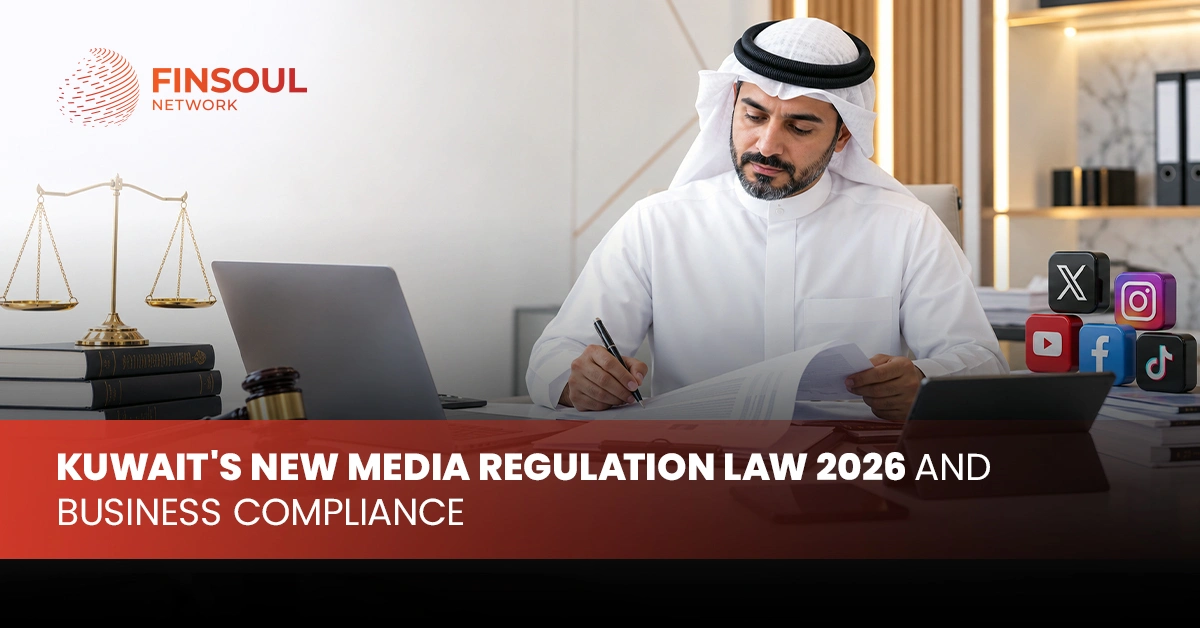
Kuwait’s New Media Regulation Law 2026 and Business Compliance
Social media advertising, influencer promotions, and digital content are now covered by Kuwait’s New Media Regulation Law. Decree-Law No. 102 of 2026 was published in Kuwait Al-Youm, issue 1811, on 4 October 2026. It sets rules for traditional and digital media, including advertising and promotional activities on social platforms.
The law will take effect six months after publication. The Ministry of Information also has up to six months from publication to issue the executive regulations, which will explain how the requirements apply in practice.
Businesses should review the published provisions while waiting for further details on licensing procedures and compliance requirements. If the published English translation differs from the Arabic text, the Arabic version in the Official Gazette takes precedence.
What Does The 2026 Media Law Change?
The decree consolidates earlier laws and repeals Law No. 3 of 2006 on Publications and Publishing, Law No. 61 of 2007 on Audiovisual Media and Law No. 8 of 2016 regulating electronic media, along with conflicting provisions. It covers traditional media, digital publishing, advertising and social media promotion. Al Tamimi & Company’s legal update summarises the changes.
The law defines electronic media outlets to include certain pages, websites, applications and social accounts used for regular professional or commercial media activity, such as news coverage or publishing media and advertising content. It excludes an ordinary company account used to introduce the business or display its own products and services, unless it is also used for regular media activity beyond that purpose. A retailer posting opening hours is therefore not automatically in the same position as an account regularly publishing media content for other businesses.
This distinction matters when deciding whether an account’s purpose is simply to promote the company or whether it carries out a separate media activity.
Social Media Advertising Under Kuwait’s New Media Regulation Law
Chapter Eight of the law deals with promoters and advertisers on social media platforms. Article 34 says that the rules apply to a promoter or advertiser, whether a citizen, resident or visitor, when their advertising or promotional content targets an audience in Kuwait. It states that promotional and advertising activity, whether paid or unpaid, requires a licence in accordance with the conditions and circumstances to be set out in the executive regulations.
Under Kuwait’s New Media Regulation Law, companies should review influencer agreements, sponsored posts, product gifting, affiliate promotions and campaigns arranged through third parties. A post should not be assumed to fall outside the rules simply because no cash payment was made.
Kuwait’s New Media Regulation Law also requires clear disclosure when content contains advertising or promotional material. Businesses should make the commercial nature of a collaboration easy for audiences to recognise and monitor Ministry announcements for detailed formats and procedures.
How Can Businesses Prepare Before The Law Takes Effect?
Businesses can review their current practices now, without assuming requirements that have not yet been specified.
1. Review Every Account And Campaign
List company accounts, agency-managed profiles, influencer partnerships, paid campaigns and product reviews. Record who creates and approves content, who pays for it, and which audience it targets. This helps the business identify activities that may need closer review.
2. Check How Advertising Is Disclosed
Review captions, videos, live streams and creator briefs. Make sure audiences can recognise commercial relationships, and update disclosure practices when official guidance is issued.
3. Keep Records Of Approvals
Keep campaign briefs, contracts, invoices, final content and approval dates. Also check whether separate advertising rules apply to the product or service.
4. Check Claims, Images And Customer Privacy
Check testimonials, customer photographs, comparisons and performance claims before publishing them. The business should have permission to use the material and evidence for its claims. Privacy, consumer protection, copyright and cybercrime laws may also apply.
5. Assign Responsibility
Assign someone to review campaign materials and track updates. In a small company, this may be the owner or marketing manager, with legal questions referred to a qualified adviser.
What Does This Mean For Marketing Teams And Agencies?
A documented social media marketing strategy should cover audience, budget, and creative objectives alongside compliance. Campaign plans should identify the content type, participants, disclosures, approval responsibilities, and records to retain. Teams should distinguish their own product promotion from a separate advertising or media service.
Businesses searching for social media marketing Kuwait services should ask prospective agencies how they handle disclosures, creator contracts, content approvals, and regulatory changes. A social media marketing specialist can coordinate campaign delivery, but marketing expertise alone does not replace legal advice on whether a licence is required.
For social media brand marketing, companies should keep brand claims consistent and supported by evidence across their website, paid posts and influencer content. If an external creator makes a claim that the company could not make itself, the business should check whether it is accurate before the post goes live.
When comparing social media marketing companies in Kuwait, ask who obtains permissions, checks content, handles complaints, and monitors rule changes. Hiring an agency does not necessarily transfer every legal responsibility away from the business.
What Happens To Existing Media Operators?
The decree gives the competent minister six months from publication to issue executive regulations. Existing operators covered by the law then have six months from the issuance of those regulations to regularise their status. The decree says that failure to do so within that period results in licence cancellation. The exact practical steps will depend on the activity and the implementing rules.
As the law takes effect six months after publication on 4 October 2026, businesses should review their activities and follow official updates. The regularisation period for existing operators is not a blanket extension for every person or campaign; obligations depend on the activity and implementing regulations.
The Ministry of Information’s laws and regulations page is a useful official starting point for monitoring media legislation. Businesses should also review the published decree and seek advice where their activities may be covered by more than one regulatory regime.
Practical Compliance Checklist
Before launching the next campaign, businesses affected by Kuwait’s New Media Regulation Law can ask:
- Does the account only present the company and its own products or services, or does it conduct regular media or advertising activity for others?
- Does the campaign involve a promoter, influencer, advertiser, or third-party agency?
- Is the commercial purpose clear to viewers?
- Can the company substantiate product claims, testimonials and comparisons?
- Are image, copyright, and customer-data permissions in place?
- Does the team have a record of the contract, approvals, and final published content?
- Has someone been assigned to monitor executive regulations and Ministry announcements?
How Finsoul Network Kuwait Supports Business Planning
Finsoul Network Kuwait supports compliance planning by helping businesses map responsibilities, organise records, and identify questions for legal review. This business support does not replace advice from a Kuwaiti lawyer or a decision by the relevant authority.
Conclusion
Kuwait’s New Media Regulation Law brings social media promotion and advertising within a broader media framework and sets out new expectations around licensing and disclosure. Companies should review how they use business accounts, influencers and agencies; keep evidence of approvals; and follow the executive regulations as they are issued. Businesses should identify potentially covered activities and confirm the applicable requirements before assuming existing marketing processes are sufficient.
Finsoul Network Kuwait helps businesses organise their compliance planning and identify operational questions that require further review. For decisions about licensing or legal exposure, obtain advice from a qualified Kuwaiti legal professional.
Frequently asked questions
Does every business social media account need a media licence?
Not necessarily. The law’s definition of an electronic media outlet excludes accounts used simply to introduce a business or display its own products or services, unless they are also used for regular media activity beyond that purpose. The rules for a specific activity should be checked against the law and executive regulations.
Do influencers need a licence for promotional content?
Article 34 establishes a licensing requirement for promotional and advertising activity targeting an audience in Kuwait, whether paid or unpaid, subject to conditions to be set out in the executive regulations. Influencers and businesses should follow the official implementation rules before relying on assumptions about exemptions.
What types of social media activities may fall under Kuwait’s New Media Regulation Law?
The law covers promotional and advertising activities targeting audiences in Kuwait, including influencer promotions and sponsored content. Whether a specific account or activity requires a licence depends on the law’s provisions and the conditions set out in the executive regulations.
What should businesses do while waiting for the executive regulations?
Businesses should review their social media accounts, influencer agreements, advertising disclosures and campaign approval records. They should also monitor announcements from Kuwait’s Ministry of Information and seek advice from a qualified Kuwaiti legal professional if they are unsure whether their activities require a licence.
When does the new law take effect?
The decree was published in Kuwait Al-Youm on 4 October 2026 and states that it takes effect six months after publication. The executive regulations are due within six months of publication, with a separate six-month period for existing covered operators to regularise their status after those regulations are issued.
Table of Contents
Book An Appointment
No Comments