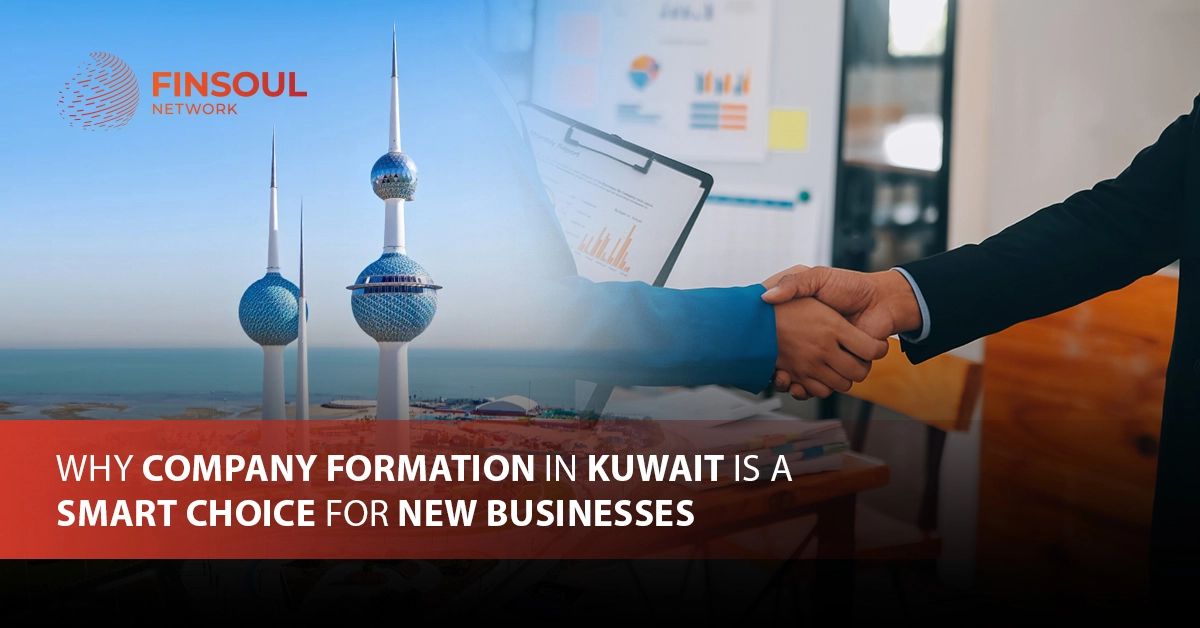
Why Company Formation in Kuwait Is a Smart Choice for New Businesses

Starting a business in Kuwait offers strong growth opportunities for entrepreneurs and foreign investors. With a stable economy, investor friendly regulations, and access to GCC markets, Kuwait is an ideal place for company formation and business expansion.

However, successful company formation in Kuwait requires proper planning, legal compliance, and effective workforce management. Finsoul Network Kuwait helps businesses streamline registration, manage regulatory requirements, and implement HR advisory services to build strong teams and sustainable operations from day one.

Why Company Formation in Kuwait Is a Smart Choice for New Businesses

Overview of Kuwait’s Economy and Business Landscape

Kuwait is a high-income Gulf nation with a stable economy built on its oil reserves. The oil and gas sector drives most of its GDP and government revenue, enabling heavy investment in infrastructure, public services, and development projects. This strong revenue base supports modern banking systems, robust financial institutions, and a regulatory framework that encourages commercial activity.

Table of Contents

1. Strategic Geographic Location

Kuwait’s location provides easy access to key GCC markets and international trade routes. Its modern ports and growing logistics networks make it an ideal hub for regional distribution, import export activities, and service based businesses. Companies can also use organizational development consultant services to align their business strategies with regional market opportunities.

2. Business-Friendly Tax Environment

Kuwait offers an attractive tax system with no personal income tax and relatively low corporate tax rates for foreign-owned companies. This allows businesses to retain more profits and reinvest in growth. Integrating HR digital transformation solutions can further help companies manage payroll, employee benefits, and compliance more efficiently.

3. Flexible Foreign Ownership Policies

Recent reforms by the Kuwait Direct Investment Promotion Authority (KDIPA) allow qualified foreign investors to own up to 100% of businesses in certain sectors. This provides greater operational control and flexibility in strategic decision-making. Companies can also benefit from HR outsourcing services to manage workforce operations effectively.

Legal Framework and Ease of Company Formation

Kuwait has a well-defined legal framework that regulates business activities and company formation. The government has introduced clear laws and streamlined procedures to make the process more efficient for both local and foreign investors. With regulatory support and digitalised processes, entrepreneurs can establish their businesses with greater transparency and ease.

  • Company formation in Kuwait is primarily governed by the Commercial Companies Law (CCL), which outlines the legal requirements for establishing, managing, and operating businesses in the country.
  • The government has introduced digital platforms and online systems that simplify the company registration process, allowing investors to submit applications, track approvals, and complete documentation more efficiently.
  • Businesses can choose from several legal structures, depending on their operational needs and ownership preferences. Common options include:
    Limited Liability Company (LLC/WLL), Shareholding Company, Branch Office of a foreign company, Representative Office, Joint Venture
  • Companies must also comply with local labour laws and workforce regulations, which govern employment contracts, working conditions, and employee rights.
  • Many organisations partner with recruitment agencies in Kuwait to access skilled talent while ensuring hiring practices remain compliant with local employment regulations.

Workforce and Human Capital

Kuwait offers a diverse and skilled workforce that supports the growth of both startups and multinational organisations. The country’s labour market includes professionals from different cultural and professional backgrounds, making it easier for companies to build capable teams.

  • Kuwait has a multilingual and skilled workforce, which is beneficial for businesses operating in international markets.
  • The country attracts professionals from various industries, providing companies with access to diverse expertise and experience.
  • Businesses can build strong teams by implementing effective workforce planning and talent management strategies.
  • Engaging HR advisory services helps companies develop structured employee management systems and align human capital strategies with overall business goals.

Market Demand and Consumer Purchasing Power

Kuwait enjoys one of the highest per capita incomes in the GCC, which translates into strong consumer purchasing power across multiple industries. This wealth fuels demand in retail, services, technology, and luxury markets, making the country an attractive destination for both local and foreign investors. Consumers in Kuwait are highly brand-conscious and value quality, which drives growth in premium products and innovative services.

To tap into this demand effectively, businesses often begin with a well-structured company formation process, ensuring compliance with local regulations and establishing a strong legal foundation for operations. Companies then rely on talent acquisition consultants to recruit skilled professionals familiar with local preferences and cultural nuances. This combination of proper company setup and strategic hiring ensures businesses not only meet market expectations but also build lasting customer relationships in a competitive environment.

Types of Business Structures in Kuwait

Understanding business structures is key to choosing the right setup:

1. Limited Liability Company (LLC/WLL)

A Limited Liability Company, often referred to as a With Limited Liability (WLL) in Kuwait, is the most common structure for small to medium-sized businesses. It requires at least two shareholders and can have up to fifty. Liability is restricted to the capital invested, protecting personal assets. Foreign investors typically need a Kuwaiti partner holding at least 51% of shares, though certain exemptions exist under investment laws. This structure is flexible, relatively simple to manage, and suitable for trading, contracting, and service-based businesses.

2. Shareholding Company

A Shareholding Company (also known as a Joint Stock Company) is designed for larger enterprises and allows public investment. It can be either closed (shares held privately) or public (shares traded on the stock exchange). This structure requires significant capital, a board of directors, and compliance with corporate governance standards. It is ideal for businesses seeking to raise funds through public offerings and expand operations on a large scale. Foreign investors may participate, but Kuwaiti ownership requirements apply.

3. Branch Office

Foreign companies can establish a Branch Office in Kuwait to conduct commercial activities directly. This structure allows the parent company to operate under its own name but requires approval from the Ministry of Commerce and Industry. A Kuwaiti agent or sponsor is often necessary to facilitate operations. Branch Offices are suitable for companies that want to execute contracts, provide services, or trade without forming a separate legal entity.

4. Representative Office

A Representative Office is limited in scope and cannot engage in commercial transactions. Its primary role is to conduct market research, promote the parent company’s products or services, and build relationships with potential clients. It serves as a strategic entry point for foreign businesses exploring opportunities in Kuwait before committing to a full commercial presence. Since it cannot generate revenue, it is often used as a preparatory step toward establishing a Branch or LLC.

5. Joint Ventures

Joint Ventures are partnerships between local and international investors, often formed for specific projects or contracts. They combine resources, expertise, and market access, making them particularly useful in sectors like construction, oil and gas, and infrastructure. Joint Ventures can be contractual (without forming a new entity) or equity-based (creating a separate company). This structure allows foreign investors to utilize local knowledge while sharing risks and profits.

Professional guidance, including organizational development consultant support, ensures the right structure is chosen for operational efficiency.

Step-by-Step Company Formation Process

Company Formation in Kuwait typically involves:

Step 1: Trade Name Reservation

The first step is to reserve a unique trade name for your business through the Ministry of Commerce and Industry. This ensures your company name is legally recognized and not duplicated.

Step 2: Document Submission

Prepare and submit the required incorporation documents to the Ministry of Commerce and Industry. These typically include the Memorandum of Association, Articles of Association, shareholder details, and identification documents.

Step 3: Commercial License Issuance

Once documents are approved, the Ministry issues a commercial license. This license legally authorizes the company to conduct business activities in Kuwait.

Step 4: Chamber of Commerce Registration

Register the company with the Kuwait Chamber of Commerce and Industry. This step is mandatory for businesses to operate and engage in trade within the country.

Step 5: Bank Account Setup and Capital Deposit

Open a corporate bank account in Kuwait and deposit the required share capital. Proof of deposit is often needed to finalize registration and licensing.

Step 6: Staff Recruitment and Onboarding

Businesses can work with recruitment agencies in Kuwait to hire and onboard staff concurrently with the formation process. This ensures operations can begin smoothly once the company is legally established.

Key Sectors for Investment

Kuwait presents opportunities across multiple sectors:

  • Technology and Fintech: Digital startups benefit from government-backed programs, innovation hubs, and regulatory support aimed at fostering financial technology solutions.
  • Healthcare and Education: Rising demand for advanced medical services and quality educational institutions creates opportunities for private investors to fill service gaps.
  • Logistics and Manufacturing: Kuwait’s strategic location, modern ports, and industrial zones make it ideal for logistics operations and manufacturing ventures targeting regional markets.
  • Retail and Consumer Services: Strong purchasing power and a growing consumer base drive expansion in retail, hospitality, and lifestyle services.

Engaging an HR consulting services in kuwait ensures these sectors have optimised workforce strategies from inception.

Role of HR Services in Business Success

Human capital management is critical for business growth. Services like HR consulting services and talent acquisition consultant solutions help businesses:

  • Recruit skilled employees efficiently
  • Optimize payroll and compliance processes
  • Design performance management and training programs
  • Support organizational development strategies

Integrating HR expertise ensures companies achieve operational efficiency and sustainable growth.

Digital Transformation Opportunities

Here’s a clear bullet-style breakdown of Digital Transformation Opportunities in Kuwait:

  • HR Digital Transformation Tools: Companies can adopt platforms to manage employees, automate HR processes, and streamline recruitment.
  • Automation of HR Processes: Digitization reduces manual tasks, improves accuracy, and speeds up workflows across payroll, attendance, and performance management.
  • Enhanced Productivity: Digital solutions empower teams with self-service portals, mobile access, and integrated systems that boost efficiency.
  • Operational Efficiency: Digitisation minimises redundancies, cuts costs, and ensures smoother coordination across departments.
  • Real-Time Insights: Advanced analytics provide managers with instant data for informed decision-making and strategic planning.

Conclusion:

Kuwait offers a powerful combination of economic stability, strategic location, and investor friendly policies, making it an ideal destination for new businesses. From flexible company structures to strong market demand, the opportunities for growth are significant. However, success depends on more than just registration. It requires the right strategy, compliance, and efficient workforce management from the start.

Partnering with experts like Finsoul Network Kuwait ensures your business is set up correctly and positioned for long term success. Whether you need guidance in company formation, workforce planning, or operational support, having the right team by your side makes all the difference. Take the first step today. Start your company formation in Kuwait with expert support and build a strong foundation for sustainable growth.


FAQs

What is the most common business structure, and how does Finsoul Network Kuwait fit in?

The Limited Liability Company (LLC/WLL) is the most popular choice, especially for small to medium-sized businesses, as it limits shareholder liability and is relatively straightforward to set up. Many firms, including Finsoul Network Kuwait, operate under this structure to benefit from flexibility and compliance with local regulations.

Can foreign investors fully own a company in Kuwait?

In most cases, foreign investors require a Kuwaiti partner holding at least 51% of shares. However, certain exemptions exist under Kuwait’s investment laws for specific sectors.

How long does it take to register a company in Kuwait?

The process typically takes several weeks, depending on approvals from the Ministry of Commerce and Industry, Chamber of Commerce registration, and completion of banking requirements.

What sectors offer the best investment opportunities in Kuwait?

Key sectors include technology and fintech, healthcare and education, logistics and manufacturing, and retail and consumer services, all driven by strong consumer demand and government support.

Are there restrictions on Representative Offices?

Yes. Representative Offices cannot engage in commercial transactions; they are limited to market research, promotional activities, and building local relationships.

Leave a Reply

Your email address will not be published. Required fields are marked *