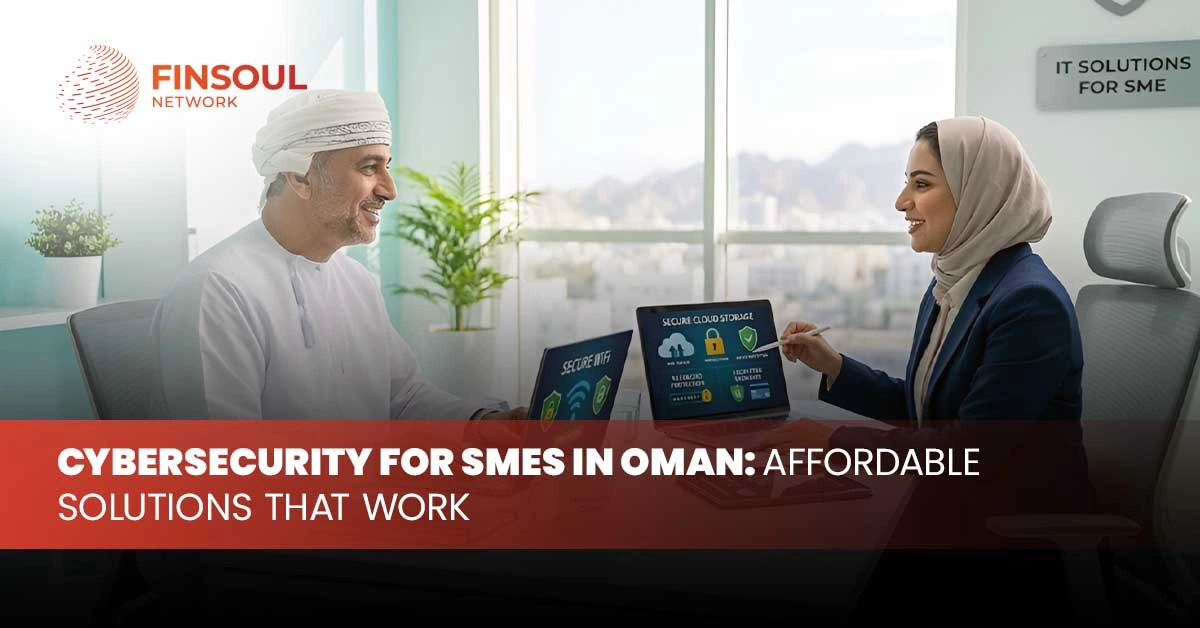
Cybersecurity for SMEs in Oman: Affordable Solutions That Work
A small cyberattack can damage a business faster than most owners expect. Many SMEs in Oman still use weak passwords, outdated systems, and unprotected employee devices without realizing how risky these gaps have become. Hackers now target smaller businesses because they usually carry less protection than large companies. One fake invoice email or ransomware attack can stop operations, expose customer data, and create serious financial loss. Most business owners know cybersecurity matters, yet many avoid taking action because security tools often look expensive and difficult to manage.
Finsoul Network Oman helps SMEs build strong cybersecurity protection using practical and affordable solutions that fit real business needs. Smart security steps, trained employees, secure backups, and proper monitoring can reduce major cyber risks before they turn into costly problems
Table of Contents
Why SMEs in Oman Are Becoming Easy Cyber Targets?
Small businesses in Oman have become easy targets for cybercriminals because many still depend on weak security practices. Remote work, cloud software, shared devices, and poor password habits create simple entry points for attackers. Many SMEs also run without dedicated IT teams, which makes security monitoring difficult. Employees often click on fake emails or suspicious payment links without noticing the danger.
Cyber fraud crimes in Oman increased by 35% during the first quarter of 2025, according to the Royal Oman Police, while phishing and financial scams continue rising across digital platforms. Attackers usually target SMEs because smaller companies have limited protection and slower response systems. One stolen password or infected device can expose customer data, interrupt operations, and create serious financial damage that small businesses struggle to recover from.
Common Cybersecurity Mistakes Small Businesses Make
Many cyberattacks succeed because small security gaps are ignored for too long. Small businesses often focus on daily operations while basic cybersecurity mistakes quietly increase the risk of data theft and financial loss.
- Shared passwords between employees increase the chance of unauthorized access and make account tracking difficult during security incidents.
- No multi-factor authentication allows hackers to enter systems easily after stealing passwords through phishing emails or fake login pages.
- Outdated software leaves business systems exposed because old applications usually contain security weaknesses that attackers already know how to exploit.
- No backup systems create serious problems after ransomware attacks because businesses cannot recover important files quickly.
- Unsecured WiFi networks create easy access points for attackers, especially in small offices using weak router passwords and outdated security settings.
Affordable Cybersecurity Solutions That Actually Work
Strong cybersecurity does not always need expensive systems or a large IT team. Small businesses in Oman can reduce cyber risks using affordable tools that protect daily operations and business data.
Multi-Factor Authentication (MFA)
Multi-factor authentication adds an extra login step before users access business accounts. Employees enter a password and confirm login through a code or authentication app. This blocks many phishing attacks, even if passwords get stolen. Google Authenticator and Microsoft Authenticator give free MFA protection, and setup usually takes less than 10 minutes
Endpoint Protection for Employee Devices
Employee devices often become easy targets for malware and ransomware attacks. Endpoint protection helps monitor laptops, phones, and office systems for suspicious activity. Affordable tools like Microsoft Defender and Bitdefender help SMEs protect devices without high security costs.
Cloud Backup Solutions
Cloud backups help businesses recover files after ransomware attacks or system failures. Automatic backups save important data regularly and reduce downtime during emergencies. Google Drive and OneDrive give affordable backup storage for SMEs handling customer and financial records
Employee Cybersecurity Awareness Training
Many cyberattacks happen because employees click on fake links or suspicious invoice emails. Cybersecurity awareness training teaches staff how to spot phishing attempts and unsafe websites before damage happens. Small businesses gain strong protection through regular employee awareness sessions
Managed Security Services for SMEs
Managed security services give SMEs professional cybersecurity support without hiring a full internal IT security team. Businesses receive system monitoring, threat detection, and security updates at a lower monthly cost. This helps SMEs improve protection while staying within budget.
How Much Should SMEs Spend on Cybersecurity?
Cybersecurity cost depends on business size and how much data protection is needed. Small startups in Oman usually spend around 20 to 80 OMR per month. This covers basic tools like antivirus, password managers, and cloud backups. Medium SMEs with more staff and customer data often spend between 100 and 300 OMR per month for stronger protection, device monitoring, and email security.
Companies handling financial records or online payments may need higher protection layers, which increases the budget slightly. The key is not spending large amounts but choosing the right tools for each risk level. Many businesses start small, then slowly increase security spending as operations grow and digital activity expands. This step-by-step approach keeps costs controlled while maintaining strong protection against common cyber threats in daily work.
Cybersecurity Regulations and Compliance in Oman
Cybersecurity rules in Oman are becoming more important as businesses go digital. Even small companies now handle data, payments, and records that need basic protection.
- Data Protection Awareness: Businesses must handle customer data carefully and avoid unsafe sharing. Weak control can lead to trust loss and legal problems.
- Industry Expectations: Companies are expected to follow basic security practices to protect systems and customer data. Ignoring this can create risk and harm to reputation.
- Financial Sector Sensitivity: Banks and financial firms follow strict security rules due to fraud risk. SMEs linked with payments need similar care.
- Healthcare Data Protection: Patient records need strong protection since medical data must stay private. Any breach can create serious issues.
- SME Compliance Responsibility: Small businesses also need basic security habits, even without IT teams. Simple steps help meet core compliance needs
Step-by-Step Cybersecurity Plan for SMEs
A simple plan helps SMEs in Oman stay protected without confusion or heavy systems. Each step adds basic protection that lowers common cyber risks.
Audit Devices
Check all laptops, phones, and office systems used in daily work. Old software, unknown apps, and weak settings often create hidden security gaps.
Change Passwords
Replace weak and repeated passwords across all accounts. Strong, unique passwords reduce the chances of account theft through phishing attacks.
Enable MFA
Turn on multi-factor authentication for email, cloud tools, and business systems. Extra login verification blocks most unauthorized access attempts.
Backup Files
Store copies of important data on cloud storage like Google Drive or OneDrive. Regular backups help recover files after cyber incidents.
Train Employees
Teach staff how to spot fake emails, links, and invoice scams. Human mistakes remain one of the biggest causes of cyber issues.
Install Endpoint Protection
Add antivirus and device security tools to all business systems. This helps detect malware and unsafe activity early.
Monitor Systems
Track login activity, alerts, and unusual behavior. Early detection reduces damage and response time during attacks.
Why Affordable Cybersecurity Is Better Than Recovering From an Attack?
Many SMEs in Oman only think about cybersecurity after something goes wrong. A small attack can stop daily work, block access to files, and delay payments. Recovery takes time and often costs more than prevention. Simple protection tools feel like an extra expense at first, but they save much bigger losses later. Once data is stolen or systems are locked, fixing the damage becomes slow and stressful. Customers also lose trust when their information gets exposed, and that trust is hard to rebuild. Business operations may pause for days or even weeks during recovery, which affects growth and cash flow in a serious way.
- Downtime stops daily operations and slows revenue flow
- Financial loss increases due to recovery costs and delays
- Customer trust drops after data exposure or a security breach
Need help securing your SME in Oman at a low cost?
Small businesses often face cyber risks through weak passwords, fake emails, and unsafe devices. A simple security setup can protect data, customers, and daily operations without incurring high costs. Finsoul Network Oman helps SMEs build practical cybersecurity solutions that fit real business needs and budgets. From basic protection to smart planning, the focus stays on keeping your systems safe and stable.
Email: info@finsoulnetwork.com
Phone: +968 7733 8545
Conclusion
Cybersecurity is no longer only a concern for large companies. SMEs in Oman now face growing risks from phishing, weak passwords, and unsafe digital habits. Small steps like backups, MFA, and employee awareness can protect business data and reduce financial loss. The goal is not complex systems but consistent protection that fits daily operations. Every business can start small and improve security over time without high costs or confusion. Strong cybersecurity keeps operations stable and builds long-term trust with customers in a digital world. Finsoul Network Oman helps SMEs stay protected with practical, budget-friendly cybersecurity support built for real business needs.
FAQs
How much does cybersecurity cost for small businesses?
SMEs in Oman usually spend around 20–80 OMR monthly for basic security tools, depending on size.
Can SMEs in Oman use free cybersecurity tools?
Yes, free tools like Google MFA, Microsoft Defender, and basic cloud backups work well for early protection.
What are the most common cyberattacks in Oman?
Phishing emails, fake invoices, password theft, and ransomware attacks are the most common threats for SMEs.
Why do hackers target small businesses?
Small businesses have weaker security systems and limited IT support, making them easier to access.
Is antivirus enough for SMEs?
No, antivirus alone is not enough. SMEs need MFA, backups, and employee awareness for proper protection.
No Comments
Recent Blogs