E-Invoicing is Coming to Oman: What Businesses Need to Know
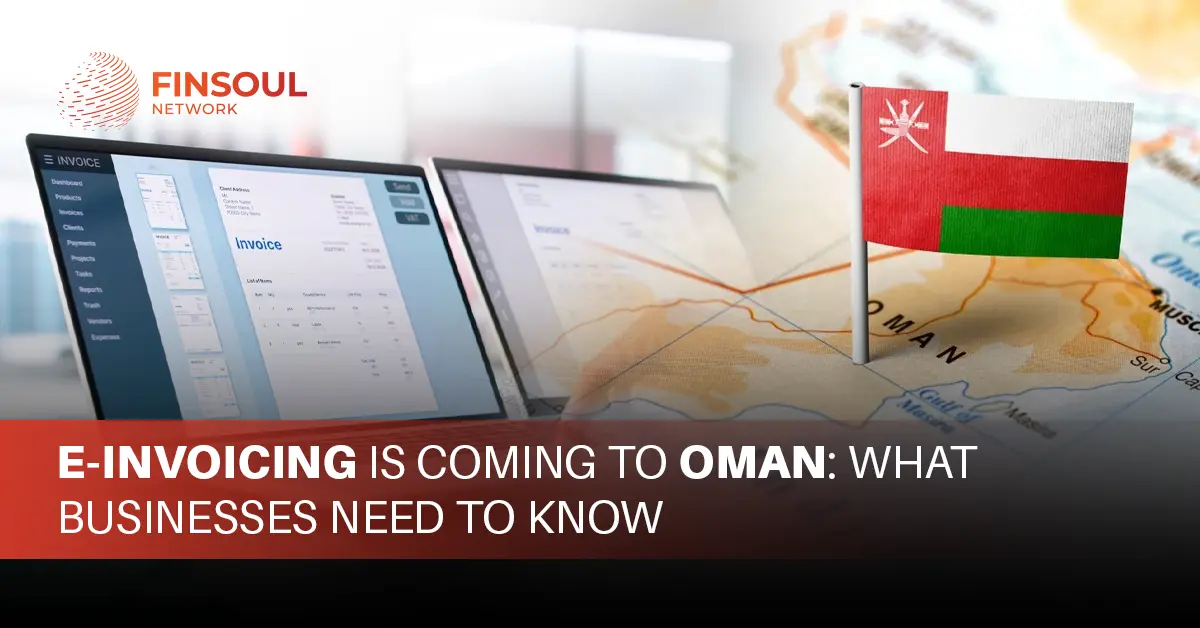
The Oman Tax Authority (OTA) has officially announced the phased implementation of e-invoicing, starting in August 2026. This marks a major shift in how businesses issue, validate, and report invoices. The goal is to modernize tax administration, reduce fraud, and align Oman with global standards in digital compliance.
E-invoicing will become mandatory for all businesses over time, starting with large taxpayers. It is not just a technical upgrade it is a strategic move toward transparency, automation, and real-time oversight.
To help businesses prepare, Finsoul Network Oman offers customised e-invoicing readiness services, including system upgrades, ASP onboarding, and compliance support aligned with OTA’s Fawtara framework.
Understanding the Fawtara Program and the Five-Corner Model
Oman’s e-invoicing initiative is called Fawtara, modeled after the Five-Corner Framework used in countries like Saudi Arabia and Singapore. In this system:
- The supplier issues an invoice electronically.
- The invoice is routed through an Accredited Service Provider (ASP).
- The ASP validates and transmits the invoice to the OTA.
- The buyer receives the validated invoice.
- The OTA stores and monitors the invoice for compliance.
This model ensures secure, standardized, and traceable invoicing across all sectors.
Table of Contents
Key Milestones and Rollout Timeline
The OTA has outlined a clear timeline:
- May 2025: OTA signed the implementation agreement with its technology partner.
- November 2025: Technical specifications for ASPs will be published.
- August 2026: Phase 1 begins with 100 selected large taxpayers.
- Early 2027: Phase 2 expands to all large taxpayers and medium-sized businesses.
- 2028: Full rollout expected, including small businesses and freelancers.
This phased approach gives businesses time to prepare but early action is essential.
What Is E-Invoicing and How Does It Work?
E-invoicing means sending invoices digitally instead of using paper or PDF files. These invoices are created through accounting or ERP software, then checked instantly by the Oman Tax Authority (OTA) to make sure they meet the required format and data rules. After validation, they are sent through PEPPOL-compliant systems and stored securely for audits and tax reporting. To follow the process correctly, businesses must work with an Accredited Service Provider (ASP) approved by the OTA.
Who Will Be Affected and When?
The mandate will apply in stages:
- Phase 1: Top 100 large taxpayers selected by OTA
- Phase 2: All large taxpayers and medium-sized businesses
- Final Phase: Small businesses, freelancers, and government suppliers
If your business falls into any of these categories, you will need to prepare your systems and teams well before your assigned phase begins.
Technical Specifications and ASP Accreditation
By November 2025, the OTA will release detailed technical guidelines, including:
- Invoice format and mandatory fields
- Security and encryption protocols
- Integration requirements for ASPs
- Validation and transmission standards
Only ASPs that meet these specifications will be accredited. Businesses must choose an ASP that supports PEPPOL and complies with OTA’s framework. Finsoul Network Oman helps clients evaluate and onboard the right ASP for their needs.
Preparing Your Business for E-Invoicing
To ensure a smooth transition, businesses should take the following steps:
1. Conduct a Readiness Assessment
Review your current invoicing workflows, ERP capabilities, and data formats. Identify gaps that may prevent compliance.
2. Upgrade Financial Systems
Ensure your accounting software can generate structured e-invoices and integrate with PEPPOL platforms. Legacy systems may need replacement or enhancement.
3. Train Finance and IT Teams
Educate your staff on e-invoicing requirements, validation processes, and system workflows. Early training reduces errors and delays.
4. Engage with Experts
Partner with firms like Finsoul Network Oman to guide your transition. We offer readiness audits, system upgrades, and ASP onboarding support.
Strategic Benefits of E-Invoicing
Finsoul Oman helps businesses unlock these benefits through customised e-invoicing solutions ensuring compliance, efficiency, and peace of mind.
- Faster Processing and Payments E-invoices are transmitted instantly, reducing delays and speeding up payment cycles. This improves cash flow and helps businesses manage working capital more effectively.
- Fewer Errors and Less Paperwork Automation eliminates manual entry mistakes and removes the need for physical documentation. Businesses save time, reduce disputes, and streamline operations.
- Real-Time Validation by OTA Each invoice is checked instantly by the Oman Tax Authority, ensuring compliance before it reaches the buyer. This reduces the risk of rejection or penalties.
- Better Audit Readiness Digital records are organized, traceable, and easy to retrieve. Businesses are always prepared for audits without scrambling for paperwork.
- Stronger Security and Fraud Prevention E-invoicing platforms use encryption and secure transmission, protecting sensitive financial data and reducing the risk of invoice fraud.
These advantages improve financial control, operational efficiency, and stakeholder trust.
Common Challenges and How Finsoul Oman Solves Them
1. Outdated Software and Limited E-Invoicing Features
Many businesses still use manual or legacy systems that cannot generate structured e-invoices or connect to PEPPOL platforms. Finsoul Network Oman upgrades your ERP or accounting tools to support OTA-compliant invoicing, validation, and secure transmission without disrupting your operations.
2. Lack of Internal Expertise on PEPPOL and ASPs
Finance and IT teams may be unfamiliar with PEPPOL standards or ASP integration. We provides hands-on training and onboarding support, ensuring your team understands the technical requirements and can manage e-invoicing confidently.
3. Data Errors That Cause Invoice Rejections
Missing fields, mismatched tax codes, or inconsistent formats can trigger validation failures. we helps standardize your invoice data and implements automated checks to ensure every invoice passes OTA validation smoothly.
4. Delayed Onboarding and Compliance Risks
Waiting too long to prepare can lead to rushed setups, missed deadlines, and penalties. Finsoul Network Oman offers phased onboarding plans, readiness audits, and ASP integration support so your business is fully compliant before your rollout phase begins.
Sector-Specific Impacts and Adaptation Strategies
Different industries will experience unique impacts:
- Retail: High-volume invoicing requires scalable automation and real-time validation.
- Logistics and construction: Complex billing structures need flexible integration with ERP systems.
- Professional services: Time-based billing must be standardized for e-invoicing formats.
- Government suppliers: Must meet strict validation and reporting timelines.
Finsoul Oman offers customised onboarding strategies for each sector, ensuring smooth adaptation and compliance.
How Global Providers Like Pagero Are Supporting Oman
Global platforms like Pagero are working with the OTA to provide PEPPOL-compliant solutions. These platforms help businesses:
- Generate and transmit e-invoices
- Validate data in real time
- Maintain secure audit trails
Finsoul Oman partners with leading ASPs to ensure clients are connected to the right platforms for their needs.
Why Early Preparation for E-Invoicing Is Essential
Avoid costly disruptions with proactive planning. Waiting until 2026 is risky. Businesses that delay preparation may face:
System incompatibility Businesses using outdated ERP or accounting software may find their systems unable to generate or transmit PEPPOL-compliant e-invoices. Finsoul Oman conducts readiness audits and recommends upgrades to ensure your systems meet OTA’s technical standards.
Staff confusion Without early training, finance and IT teams may struggle to understand e-invoicing workflows, validation rules, and ASP integration. Training and onboarding support helps your team feel confident and capable before the mandate begins.
Missed deadlines Waiting too long can lead to rushed implementation, incomplete setups, and failure to meet OTA’s rollout timeline. Phased onboarding plans help you prepare well in advance, avoiding last-minute stress and penalties.
Compliance penalties Non-compliance with OTA’s e-invoicing requirements could result in rejected invoices, delayed payments, or financial penalties. Finsoul Oman helps you stay aligned with OTA standards and avoid unnecessary risks.
Partnering for Success: How Finsoul Network Oman Can Help
Finsoul Network Oman supports businesses across Oman with everything needed for e-invoicing readiness:
- Readiness Audits We assess your current invoicing setup and identify gaps against OTA’s e-invoicing requirements.
- System Upgrades We help upgrade or integrate ERP and accounting systems to support structured, PEPPOL-compliant invoices.
- ASP Selection & Onboarding We guide you in choosing the right Accredited Service Provider and ensure smooth integration with your systems.
- Team Training We train your finance and IT teams on e-invoicing workflows, validation rules, and compliance checkpoints.
- Ongoing Support We provide continuous guidance to keep your business aligned with OTA updates and audit-ready.
Finsoul Oman ensures your business is not just compliant but confident, efficient, and ready for Oman’s digital tax future.
Final Thoughts: E-Invoicing Is the Future of Tax Compliance in Oman
E-invoicing is more than a technical upgrade it is a strategic shift toward digital governance and financial transparency. Businesses that prepare early will not only stay compliant but also gain a competitive edge in efficiency, accuracy, and trust.
No Comments