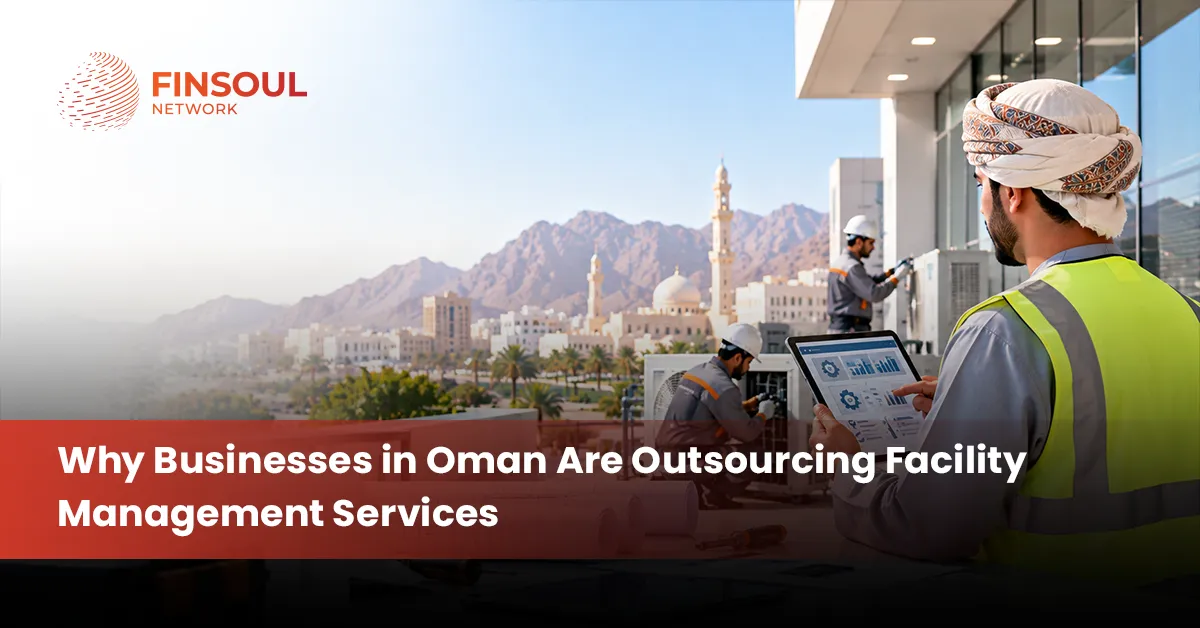

Why Businesses in Oman Are Outsourcing Facility Management Services
A few years ago, many businesses in Oman handled facility management much like payroll or administrative work: internally, informally, and with limited planning. That approach is changing. As buildings become more complex, maintenance requirements increase, and companies focus more on their core operations, outsourced facility management Oman businesses once handled internally is increasingly being given to specialist providers.
Finsoul Network Oman sees this shift among businesses that need reliable maintenance, technical support, contractor coordination, and compliance management without building a large facilities team of their own. Outsourcing is not only about reducing costs. It also gives businesses access to skilled personnel, established maintenance processes, and support that can scale as their operations grow.
What Facility Management Actually Covers
Facility management covers much more than fixing equipment when something breaks. It involves the ongoing maintenance, operation, safety, and support of the physical environment in which a business operates.
The exact scope depends on the type and size of the facility, but most facility management services Oman businesses use fall into three broad areas.
Hard Services
Hard services deal with the physical systems and equipment that keep a building functioning.
These can include:
- Electrical system maintenance
- Plumbing and drainage
- HVAC maintenance
- Fire and safety systems
- Building maintenance
- Lift and escalator maintenance
- Generator and backup power systems
- Preventive and corrective maintenance
- Mechanical equipment servicing
Soft Services
Soft services support the cleanliness, usability, and day-to-day operation of a facility.
They can include:
- Cleaning and housekeeping
- Security services
- Pest control
- Waste management
- Landscaping
- Reception and front-desk support
- Parking management
- General facility support
These services directly affect the workplace environment and the experience of employees, customers, tenants, and visitors.
Specialized Compliance Services
Some facilities also require more specialized support to meet operational, safety, and regulatory requirements.
This may include scheduled inspections, health and safety checks, fire system testing, documentation, environmental controls, and maintenance records. For businesses operating in regulated or technically demanding environments, keeping these requirements under control is an important part of facility management.
Why Businesses Are Moving Away From In-House FM
The decision to outsource facility management is usually driven by several factors rather than one issue. Businesses are looking at the cost of internal staffing, the technical knowledge required, maintenance demands, and the time their own employees spend managing facilities.
Rising Complexity of Building Systems
Modern commercial buildings depend on multiple electrical, mechanical, HVAC, fire protection, security, and building management systems.
Managing these systems internally requires qualified personnel and regular maintenance schedules. It also requires someone to monitor contractors, maintain records, arrange inspections, and respond when equipment fails. For smaller businesses, maintaining this level of technical capability internally can be difficult and expensive.
Cost Pressure and Budget Scrutiny
Facility costs can quickly increase when maintenance is reactive rather than planned.
Unexpected equipment failures, emergency repairs, overtime, replacement parts, and repeated contractor visits can put pressure on operating budgets. Businesses are therefore paying closer attention to preventive maintenance and long-term facility costs. Outsourcing can make these expenses easier to plan by placing maintenance activities, staffing, and service requirements under an agreed scope.
Focus on Core Business Activities
A finance team should not have to spend hours chasing an air-conditioning contractor. Likewise, an operations manager should not have to coordinate every maintenance request across an office or commercial facility.
When facility-related tasks start taking up too much management time, outsourcing allows internal employees to focus on their actual business responsibilities. The facility still receives the attention it needs, but the responsibility sits with a team that specializes in it.
Access to Specialized Expertise Without Building It Internally
Hiring individual technicians for every technical requirement can quickly become expensive.
An outsourced provider can bring together professionals covering different areas of facility management. Businesses can therefore access electrical, mechanical, HVAC, maintenance, cleaning, safety, and other support without hiring a separate internal team for each function.
Scalability as Operations Grow
Facility requirements often change as a company expands. A business moving into a larger office, opening another branch, adding warehouse space, or operating across multiple locations may suddenly need more maintenance and support.
An external FM provider can adjust the level of service as those requirements change instead of the business having to rebuild its internal facilities structure every time it grows.
What Outsourced Facility Management Services Typically Include
The scope of outsourced FM depends on the facility and the agreement between the business and service provider. A typical package may include:
- Preventive maintenance schedules
- Emergency and breakdown response
- Electrical and mechanical maintenance
- HVAC servicing
- Plumbing and building repairs
- Fire and safety system maintenance
- Cleaning and housekeeping
- Security and access support
- Pest control
- Landscaping and external area maintenance
- Contractor and vendor coordination
- Compliance inspections
- Energy and utility monitoring
- Maintenance reporting
- Asset and equipment records
The objective is not simply to outsource individual tasks. A properly managed FM arrangement gives the business a clear system for handling routine maintenance, urgent issues, service providers, and facility performance.
The Cost Case for Outsourcing
Cost is one of the main reasons businesses consider outsourcing, but the financial benefit goes beyond comparing an internal employee’s salary with an external service fee.
Predictable Budgeting
An internal FM structure can involve salaries, recruitment, training, overtime, equipment, tools, replacement staff, and contractor costs.
An outsourced arrangement can bring many of these requirements under an agreed service scope. This makes it easier for management to plan facility-related expenditure and monitor additional costs.
Reduced Capital Expenditure
Businesses do not always need to purchase every specialist tool or piece of equipment required for maintenance work.
External FM services Oman providers generally have access to the equipment, technical resources, and personnel required for their contracted services. This can reduce the need for businesses to invest heavily in their own maintenance infrastructure.
Lower Risk of Costly Equipment Failure
Preventive maintenance costs money, but major equipment failure can cost considerably more.
A neglected HVAC system, electrical fault, plumbing problem, or damaged building component can interrupt operations and require emergency repairs. Regular inspections and planned maintenance help identify problems before they become major failures.
In-House vs Outsourced Facility Management: A Practical Comparison
Area | In-House FM | Outsourced FM |
Staffing cost | Business manages salaries, benefits, recruitment, and training | Staffing is managed by the service provider |
Technical expertise | Requires internal specialists or multiple contractors | Access to a wider technical team |
Multiple locations | Requires additional internal resources | Services can often be extended across locations |
Compliance tracking | Internal team manages records and inspections | Provider can manage scheduled checks and documentation |
Emergency response | Depends on internal availability and contractor arrangements | Dedicated response arrangements can be included in the service scope |
Maintenance planning | Managed internally | Provider manages schedules and planned maintenance |
The right choice depends on the size of the business, the complexity of its facilities, the number of locations, and the level of internal expertise available.
How to Choose the Right Facility Management Partner
Not all facility management companies in Oman provide the same level or range of services. Businesses should assess a provider based on its ability to handle the actual requirements of the facility rather than choosing based only on price.
Scope of Services Offered
Start by defining what needs to be managed.
A business may need only technical maintenance, while another may require complete FM support covering maintenance, cleaning, security, safety, contractor management, and reporting.
Track Record and Client References
Experience matters when a provider is responsible for equipment, buildings, safety systems, and day-to-day facility operations.
Ask about similar facilities they have managed, the type of clients they serve, and how they handle service issues. References can also provide useful insight into response times, communication, and service quality.
Response Time Commitments
A maintenance provider should have clear procedures for urgent problems.
Ask how emergency requests are handled, who receives service calls, how quickly technicians are dispatched, and how serious incidents are escalated.
These details become particularly important when a facility depends on critical systems.
Technology and Reporting Capability
Good reporting helps management understand what is happening across the facility.
Depending on the scope, reporting may cover completed maintenance, open work orders, equipment condition, recurring faults, response times, inspections, and upcoming maintenance activities.
The reporting process should be simple enough for management to use and detailed enough to support decision-making.
Compliance Knowledge Specific to Oman
Facility management in Oman requires an understanding of local requirements, safety expectations, inspections, and documentation.
A provider should be familiar with the requirements relevant to the type of facility being managed and maintain appropriate records for inspections, maintenance, and compliance-related activities.
Signs a Business Should Consider Outsourcing Facility Management
Outsourcing becomes worth considering when facility management starts creating operational or financial problems.
Common signs include:
- Maintenance requests are handled only after something breaks.
- Internal employees spend too much time dealing with contractors.
- The business lacks qualified technical staff.
- Equipment failures are becoming more frequent.
- Maintenance records are incomplete or difficult to access.
- Facility costs are difficult to predict.
- Compliance checks are being missed or delayed.
- The company is expanding into additional locations.
- Management has limited visibility into maintenance performance.
- Emergency repairs are becoming more expensive.
What the Transition to Outsourced FM Actually Involves
Moving from an internal facility team to an external provider does not happen simply by signing a service agreement. A proper transition starts with understanding the facility and establishing clear responsibilities.
Initial Site Assessment
The provider should review the facility, equipment, existing maintenance schedules, current contractors, known problems, and operational requirements.
This assessment creates a baseline for the service plan and helps identify immediate maintenance priorities.
Transition and Handover Period
Existing records, equipment information, warranties, service contracts, maintenance histories, and access requirements need to be transferred.
The outgoing team or contractors may also need to provide information about recurring problems and equipment that requires special attention.
Setting Up Reporting and Communication Channels
Everyone should know how maintenance requests are submitted, who handles emergencies, who receives reports, and how unresolved issues are escalated.
Clear communication at this stage prevents confusion once the outsourced service begins.
Ongoing Performance Reviews
Outsourcing does not mean management stops monitoring facility performance.
Regular reviews should look at completed work, unresolved issues, response times, recurring faults, planned maintenance, and service performance. These reviews also allow the business to adjust the service scope as its needs change.
Making the Move to Outsourced Facility Management in Oman
Facility management has a direct impact on how safely, efficiently, and consistently a business operates. As maintenance requirements become more demanding, keeping everything in-house is not always the most practical option.
Outsourcing gives businesses access to technical expertise, maintenance support, contractor management, and facility resources without having to build a large internal team. It can also make facility costs easier to plan and reduce the pressure placed on employees who are not specialists in FM operations.
At Finsoul Network Oman, businesses can get support in assessing their facility requirements and structuring the right facility management services approach for their operations. The right model depends on the facility, service scope, budget, and level of internal support already available.
FAQs
What are outsourced facility management services in Oman?
Outsourced facility management services involve hiring an external provider to manage selected or complete facility-related functions. These can include building maintenance, HVAC, electrical systems, cleaning, security, pest control, safety checks, contractor management, and reporting.
Why are businesses in Oman outsourcing facility management?
Businesses outsource FM to control operating costs, access specialist expertise, reduce internal workload, improve maintenance planning, and manage complex facilities without building a large internal team.
What do facility management companies in Oman typically provide?
Services vary by provider but can include preventive maintenance, corrective repairs, HVAC and electrical services, cleaning, security, landscaping, pest control, contractor management, compliance support, and facility reporting.
Is outsourcing facility management cheaper than managing it in-house?
It can be more cost-effective depending on the size and requirements of the facility. Outsourcing can reduce recruitment, training, equipment, overtime, and contractor management costs while making maintenance spending easier to plan.
Can a business outsource only some facility management services?
Yes. A business can outsource specific functions such as HVAC, cleaning, security, or technical maintenance instead of transferring the entire FM function to an external provider.
How should a business choose a facility management provider in Oman?
Look at the provider’s relevant experience, service scope, technical capabilities, response times, reporting processes, compliance knowledge, and experience with similar facilities. Price should be considered alongside the actual level of service being offered.
Table of Contents
Book An Appointment
No Comments