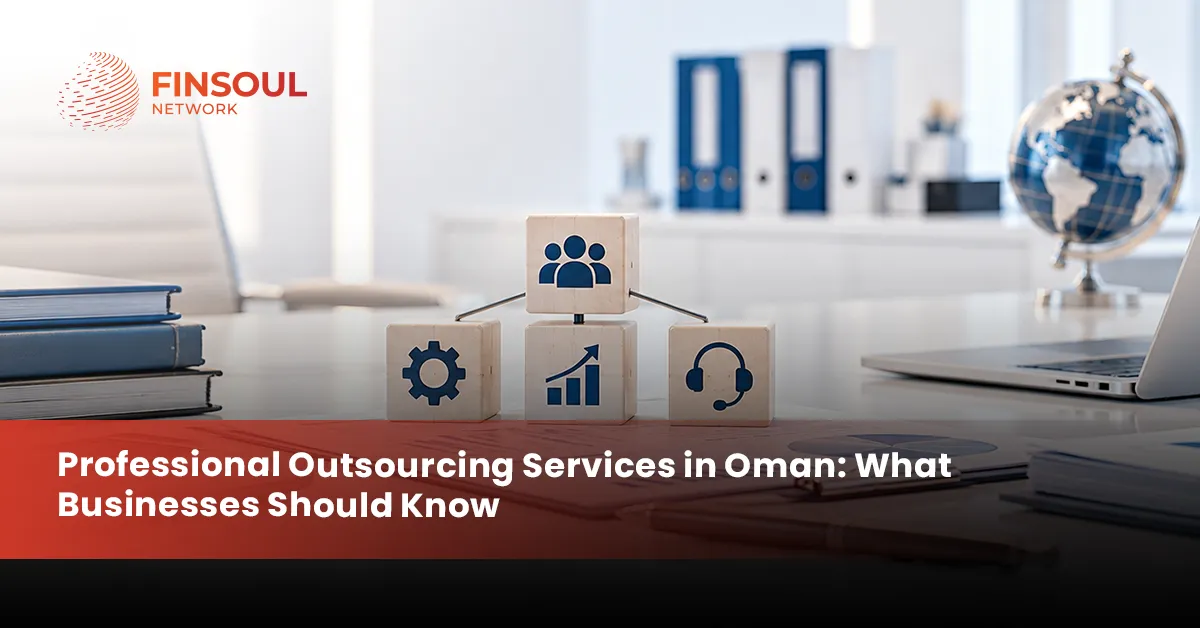
Professional Outsourcing Services in Oman: What Businesses Should Know
Businesses in Oman need reliable people, efficient processes, and strong financial controls to manage daily operations and support growth. However, maintaining every business function in-house increases staffing costs, adds administrative responsibilities, and places pressure on internal teams. For small and medium-sized enterprises (SMEs), these demands often make it harder to focus on revenue, customer relationships, and expansion.
Professional outsourcing services in Oman give businesses access to specialised expertise and operational support without requiring them to build and manage every function internally. From accounting and human resources to IT support, administrative management, and business consulting, outsourcing helps companies organise their operations around their actual needs.
Finsoul Network Oman supports businesses looking to improve operational efficiency, manage resources effectively, and establish processes that support long-term business objectives. Understanding how outsourcing works, which services offer the most value, and how to choose a suitable provider helps business owners make informed decisions about their operational strategy.
What Are Professional Outsourcing Services in Oman?
Professional outsourcing involves assigning specific business activities to an external service provider with the expertise, systems, and resources to manage those responsibilities. Instead of hiring a full internal team for every function, a business works with an external provider to obtain the services it needs.
In Oman, outsourcing is relevant to businesses across industries, including trading, construction, manufacturing, logistics, professional services, healthcare, and technology. Companies at different stages of development use outsourcing to manage workloads, access specialist skills, and maintain consistent business processes.
For example, a growing trading company might outsource bookkeeping and payroll administration instead of employing separate specialists for each task. A construction business might obtain external HR support to manage recruitment and employee records across multiple projects. A technology company might outsource IT maintenance to maintain its systems without establishing a large internal IT department.
Professional outsourcing services in Oman offer the greatest value when they address a clear operational need, establish accountability, and give internal teams more time to focus on activities that contribute directly to business growth.
Why Are Businesses in Oman Choosing Outsourcing?
Business owners need to balance operating costs, employee productivity, service quality, and regulatory responsibilities. Managing every function internally does not always provide the most efficient use of available resources. Outsourcing offers an alternative that aligns external expertise with specific business requirements.
Control Operating Costs
Recruiting full-time employees involves salaries, recruitment expenses, onboarding, training, equipment, software, and ongoing employment administration. These costs increase when a business needs specialised professionals for activities that do not require a full-time position.
Outsourcing provides access to professional support under an agreed service arrangement. Businesses pay for the services and level of support they require rather than maintaining an entire department for occasional or specialised tasks.
This approach helps companies allocate budgets more effectively. A small business, for instance, might obtain monthly accounting support at a lower overall cost than recruiting a full-time accountant, depending on transaction volumes and service requirements.
The actual savings depend on the provider’s fees, the scope of work, and the cost of managing the same functions internally. Businesses need to compare the complete costs rather than relying on the service fee alone.
Access Specialist Skills and Experience
Some business functions require technical knowledge that internal teams do not possess. Financial reporting, tax administration, cybersecurity, HR management, and process improvement all involve specialised skills and regular updates to professional practices.
Hiring experienced professionals for every function is expensive, particularly for businesses with limited headcount. Outsourcing gives companies access to relevant expertise without requiring them to develop every capability internally. External specialists also bring experience from working with different organisations. They can identify inefficient processes, recommend practical improvements, and introduce procedures that support more consistent operations.
Improve Operational Efficiency
Routine administrative activities consume time that management teams could spend on customer service, business development, product improvement, and strategic planning.
Outsourcing helps businesses organise these activities through defined workflows, assigned responsibilities, and agreed service standards. External teams manage their assigned tasks while internal employees concentrate on their core responsibilities.
For example, outsourcing payroll administration reduces the workload associated with collecting attendance information, processing salary calculations, maintaining payroll records, and preparing supporting documentation. The business retains oversight while the service provider handles the agreed administrative work.
Support Business Growth
Growing businesses frequently experience changes in staffing requirements, transaction volumes, reporting needs, and operational complexity. An internal department that works well for a small team might struggle when the company expands.
Business outsourcing Oman gives companies access to additional operational capacity without requiring them to establish every new function from scratch. Businesses can adjust the scope of external support as their needs change.
Strengthen Business Processes
Outsourcing is not limited to reducing workload. It also creates an opportunity to improve how business activities are performed and monitored.
Experienced providers can introduce standard procedures, reporting schedules, documentation practices, and performance measures. These improvements help management understand operational performance and identify problems before they affect wider business activities.
The business retains responsibility for its decisions and oversight, while the external provider manages the activities covered by the agreement.
Types of Professional Outsourcing Services Available in Oman
Businesses have different operational requirements depending on their size, industry, and growth objectives. The most suitable outsourcing arrangement focuses on functions that require specialist expertise, consume significant internal resources, or benefit from more structured management.
Accounting and Bookkeeping Outsourcing
Financial records provide the information businesses need to monitor performance, manage cash flow, and make informed decisions. Incomplete records, delayed reconciliations, and inconsistent reporting make it harder to understand the company’s financial position.
Accounting and bookkeeping outsourcing gives businesses access to professional support for maintaining financial records and organising routine accounting activities.
Services commonly include transaction recording, bank reconciliations, accounts payable and receivable management, expense tracking, financial statement preparation, and management reporting. The precise scope depends on the company’s accounting requirements and existing systems.
For businesses operating in Oman, organised accounting records also support tax administration and the preparation of documentation required for applicable reporting obligations. Companies must still ensure that their financial reporting and tax arrangements comply with the rules relevant to their legal structure and activities.
Finsoul Network Oman helps businesses address accounting and operational requirements through services aligned with their business needs.
Human Resources and Payroll Outsourcing
Managing employees involves recruitment, onboarding, attendance records, payroll administration, employee documentation, and ongoing HR support. These responsibilities become more demanding as a business grows.
HR outsourcing provides access to professional assistance with defined human resource activities. Depending on the arrangement, services include recruitment coordination, employee record management, HR policy development, payroll processing, leave administration, and workforce planning.
Payroll outsourcing is particularly useful for businesses that need accurate salary calculations and consistent documentation but do not require a large internal payroll team.
Companies operating in Oman must ensure that their employment and payroll practices meet applicable labour requirements. Outsourcing administrative tasks does not automatically transfer the employer’s legal responsibilities to the service provider. Businesses need clear procedures for reviewing payroll information, approving payments, and maintaining appropriate records.
IT Support and Technology Outsourcing
Technology systems support communication, financial management, customer relationships, and everyday business operations. System failures, cybersecurity weaknesses, and outdated software create operational risks and disrupt productivity.
IT outsourcing provides access to technical expertise for maintaining and supporting these systems. Depending on the provider, services include help desk support, software maintenance, network management, cloud services, cybersecurity monitoring, data backup, and disaster recovery planning.
Small and medium-sized businesses benefit from access to technical support without maintaining a large internal IT department. Larger companies also outsource specific technology projects when they need skills that are unavailable within their existing teams.
Businesses should establish clear expectations for system availability, data access, incident reporting, backup arrangements, and security responsibilities before outsourcing IT functions.
Administrative and Back-Office Outsourcing
Administrative work is essential to business operations, but managing it internally can take time away from higher-value activities. Back-office outsourcing allows companies to delegate repetitive tasks and establish more organised administrative processes.
Typical services include document management, data entry, records maintenance, appointment coordination, invoice processing, reporting support, and general administrative assistance.
For companies handling large volumes of paperwork or transactions, these services help maintain consistent records and reduce pressure on internal employees.
Businesses should define which records the provider can access, how information must be stored, and who is responsible for checking completed work.
Business Consulting and Operational Support
Companies often need external expertise when reviewing their organisational structure, improving internal processes, or planning expansion. Business consulting provides an independent perspective on operational challenges and opportunities.
Depending on the provider’s capabilities, consulting support covers process reviews, performance analysis, financial planning, operational risk assessment, workflow improvement, and business planning.
Outsourcing operational support is particularly useful when a business has identified a problem but lacks the internal resources or specialist knowledge to address it effectively.
The strongest arrangements connect recommendations with practical implementation. Businesses need defined deliverables, realistic timelines, and measurable outcomes, not general advice without clear responsibilities.
Compliance and Business Support Services
Businesses in Oman operate within a regulatory environment that includes requirements relating to taxation, employment, commercial activities, and financial reporting. The obligations applicable to each company depend on its legal structure, sector, licences, and activities.
External specialists provide support with documentation, record organisation, compliance calendars, reporting preparation, and coordination of relevant administrative requirements.
These services help management maintain oversight and organise important deadlines. However, outsourcing administrative compliance activities does not remove the company’s responsibility to meet applicable legal requirements.
How to Choose the Right Outsourcing Solutions in Oman
Selecting an outsourcing provider requires more than comparing service fees. Businesses need a provider that understands their operational requirements, communicates clearly, and delivers work to an agreed standard.
Identify the Functions You Need to Outsource
Start by reviewing the activities that consume the most time, require specialist knowledge, or create recurring operational problems.
A company struggling with delayed financial reporting might prioritise accounting support. A growing employer might need payroll administration and HR assistance. A business experiencing frequent technical disruptions might benefit from IT outsourcing.
Defining the problem helps narrow the selection process and prevents businesses from paying for services they do not need.
Review the Provider’s Experience
Industry knowledge matters because business processes differ across sectors. A construction company, for example, has different project reporting and workforce requirements from a professional services firm.
Review the provider’s relevant experience, service capabilities, delivery methods, and ability to work with your existing systems. Ask how the provider handles recurring tasks, resolves errors, and reports progress.
A provider that understands your operating environment is better positioned to establish workable processes and realistic service expectations.
Compare Pricing and Service Scope
Outsourcing fees vary according to the complexity of the work, service frequency, transaction volumes, and level of specialist involvement.
Some providers charge fixed monthly fees, while others use hourly rates, project-based pricing, or transaction-based charges. Each model suits different business requirements.
Before signing an agreement, confirm which activities are included, what triggers additional charges, how urgent requests are handled, and whether software or other expenses are billed separately.
A lower initial fee does not necessarily represent better value if the arrangement excludes important tasks or provides limited support.
Establish Data Security and Confidentiality Requirements
Outsourcing often involves sharing financial records, employee information, customer details, and internal business documents. Businesses need appropriate safeguards before giving an external provider access to sensitive information.
Review confidentiality clauses, access controls, data storage arrangements, backup procedures, incident reporting, and the process for returning or deleting information when the agreement ends.
Where personal data or regulated information is involved, confirm the contractual and legal requirements that apply to the arrangement. Responsibility for protecting business information needs to be clearly assigned and monitored.
Agree on Responsibilities and Performance Measures
An outsourcing agreement needs to explain who performs each task, who approves the work, and how the provider reports progress.
For example, an accounting arrangement might specify monthly reconciliation deadlines, reporting dates, document submission requirements, and procedures for resolving discrepancies.
HR outsourcing might define payroll cut-off dates, approval responsibilities, employee record procedures, and response times for routine queries.
What Should Businesses Consider Before Outsourcing?
Outsourcing improves efficiency when businesses establish clear expectations and maintain appropriate oversight. Before transferring responsibilities to an external provider, consider the following factors:
- Define the scope of work: Document the tasks, deliverables, deadlines, and exclusions covered by the service agreement. Clear expectations prevent confusion about responsibilities and unexpected charges.
- Maintain internal accountability: External providers manage the agreed activities, but company management remains responsible for reviewing results, approving important decisions, and monitoring performance.
- Plan the transition: Prepare accurate records, document existing procedures, arrange system access, and coordinate with internal employees. A structured handover reduces disruption and helps the provider begin work efficiently.
- Review service performance regularly: Evaluate accuracy, turnaround times, responsiveness, costs, and the quality of deliverables through scheduled reviews. Regular assessments also help businesses identify changing requirements and adjust the scope of services.
Is Outsourcing Suitable for Small Businesses in Oman?
Outsourcing is particularly relevant to small businesses that need professional support but do not have the budget or workload to justify several full-time specialists.
A small company might need monthly bookkeeping, periodic financial reporting, payroll processing, and occasional HR advice. Recruiting separate employees for each function would increase fixed costs and management responsibilities. An outsourcing arrangement provides access to these capabilities according to the company’s requirements.
Established businesses also use outsourcing to manage growth, cover temporary skills gaps, and improve specific functions without restructuring their entire organisation.
Businesses also need to assess the sensitivity of the information involved, the provider’s reliability, and the consequences of service interruptions. Outsourcing solutions in Oman work best when the arrangement fits the company’s size, operational priorities, budget, and internal management capabilities.
Outsourcing vs In-House Operations: Which Approach Is Better?
Both outsourcing and in-house management offer advantages. The right choice depends on the importance of the function, the skills required, the available budget, and the level of control the business needs.
Factor | Outsourcing | In-house operations |
Cost structure | Service fees based on the agreed arrangement | Salaries, benefits, recruitment, training, and overheads |
Access to expertise | External specialists provide relevant skills | Expertise depends on the employees hired and retained |
Management control | Shared according to the service agreement | Direct day-to-day supervision |
Scalability | Scope of support can change with demand | Growth often requires recruitment or restructuring |
Internal workload | Reduces selected administrative responsibilities | Internal teams manage the assigned activities |
Data access | Requires controlled access and contractual safeguards | Data remains within internal systems, subject to existing controls |
Improve Business Efficiency with Professional Outsourcing Services in Oman
Managing every business function internally increases operational demands and limits the time available for strategic priorities. Outsourcing provides a practical way to access specialist skills, organise recurring tasks, and adjust business support as requirements change.
From accounting and HR to IT support, administration, and operational consulting, the right services help businesses establish more efficient processes without expanding every internal department. Finsoul Network Oman helps businesses explore professional support aligned with their operational requirements. Evaluate your current processes, identify functions that need specialist attention, and choose an outsourcing arrangement that supports your business objectives.
Frequently Asked Questions
What are professional outsourcing services in Oman?
Professional outsourcing services in Oman involve hiring an external provider to manage selected business functions, such as accounting, HR, payroll, IT support, administration, and operational consulting. Businesses use these services to access specialist expertise, manage costs, and improve operational efficiency.
Which businesses benefit from outsourcing in Oman?
Small and medium-sized enterprises, growing companies, established businesses, and organisations with specialised operational requirements benefit from outsourcing. The approach is particularly useful when a company needs professional support but does not require a full-time internal team for every function.
How much do outsourcing services cost in Oman?
The cost depends on the type of service, workload, transaction volume, technical complexity, and frequency of support. Providers offer different pricing structures, including monthly packages, hourly rates, and project-based fees. Businesses need a detailed quotation that specifies deliverables and additional charges.
Does outsourcing remove a company’s legal responsibilities in Oman?
No. Outsourcing transfers agreed tasks to an external provider, but the business generally retains its own legal and regulatory responsibilities. Companies need to confirm applicable requirements, define responsibilities in the service agreement, and monitor the provider’s work.
How do I choose the right outsourcing provider in Oman?
Evaluate the provider’s relevant experience, service scope, pricing, communication, data security measures, and reporting procedures. Review the service agreement carefully and establish measurable performance standards before beginning the arrangement.
Table of Contents
Book An Appointment
No Comments