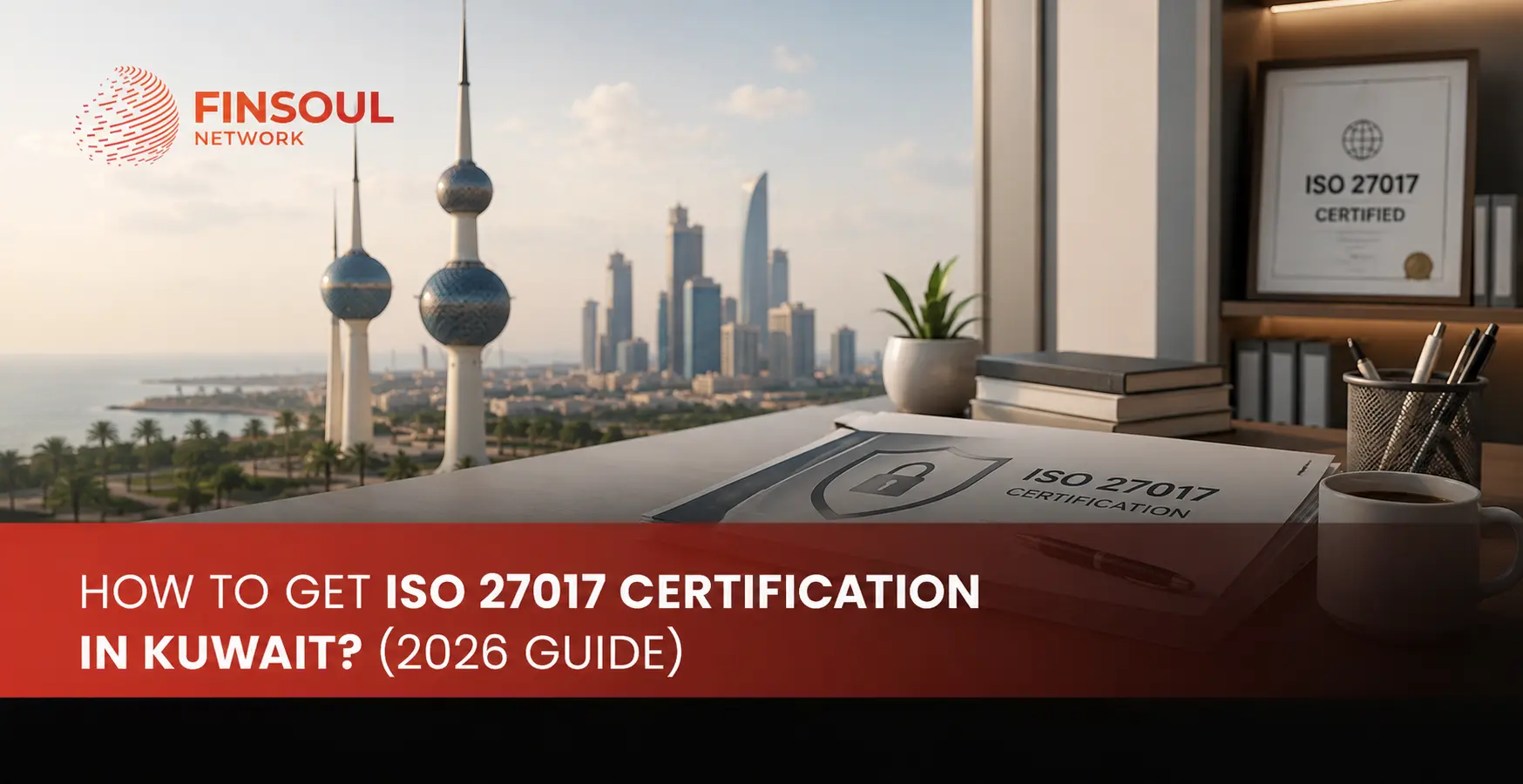

How to Get ISO 27017 Certification in Kuwait? (2026 Guide)
Kuwait’s digital economy is growing fast. Government agencies, banks, telecom companies, and private businesses are moving their operations to cloud platforms at a pace that was unimaginable five years ago. With that shift comes a very real question: how do you prove your cloud environment is actually secure? That is exactly why iso 27017 cloud security has become one of the most searched topics among Kuwait business owners and IT managers in 2026.
ISO 27017 is an international standard that gives businesses a clear code of practice for securing cloud-based systems. It builds on the well-known ISO 27001 standard but focuses specifically on cloud environments.
Table of Contents
In 2026, Kuwait’s regulators and large enterprise clients will now expect cloud-facing vendors to hold this certification before they sign contracts. If your business handles customer data, government contracts, or financial records through the cloud, ISO 27017 is no longer optional; it is a competitive requirement.
Finsoul Network Kuwait helps businesses across Kuwait understand exactly what this certification means and how to achieve it without wasting time or budget.
Before You Apply: What Your Business Needs to Have in Place
Before you start the certification process, you need to prepare your internal environment properly. Jumping straight into an audit without preparation is the fastest way to fail and lose money. Here is what your business needs before approaching a certification body:
An active ISO 27001 foundation, ISO 27017, is not a standalone standard. It works as an extension of ISO 27001, which covers your overall Information Security Management System (ISMS). If you do not hold ISO 27001 certification yet, you need to build that foundation first. Most Kuwait businesses that come to Finsoul Network Kuwait for ISO 27017 guidance start by reviewing their existing ISO 27001 posture before moving forward.
A Clear Cloud Architecture Map. You need a documented picture of every cloud system your business uses. This includes Infrastructure as a Service (IaaS), Platform as a Service (PaaS), and Software as a Service (SaaS) environments. Auditors will want to know exactly what data lives where, who controls it, and how it moves between systems.
Defined Roles for Cloud Security ISO 27017 specifically addresses the shared responsibility between cloud service providers and cloud customers. You must document who owns each layer of security. This is a common gap that businesses in Kuwait overlook before their audit.
Documented Cloud-Specific Policies You need written policies covering access management, asset management in the cloud, virtual machine security, and incident response procedures specific to your cloud environment.
Vendor Agreements That Meet Security Standards. If you use third-party cloud services, your contracts with those vendors must include security requirements aligned with ISO 27017 controls. Review your agreements before the audit begins.
The Step-by-Step Process to Get ISO 27017 Certified in Kuwait
Once your foundation is in place, the ISO 27017 cloud security certification process follows a clear path.
Step 1: Gap Analysis: Hire a qualified consultant or internal team to compare your current cloud security controls against the full list of ISO 27017 requirements. This gap analysis tells you exactly what work remains before you are audit-ready.
Step 2: Remediation and Implementation: Address every gap identified in Step 1. This usually involves updating policies, adding technical controls, training staff, and tightening vendor contracts. This phase takes the most time in the entire process.
Step 3: Internal Audit: Run an internal audit before bringing in an external certification body. This gives you a chance to find problems and fix them privately before the official assessment begins.
Step 4: Select an Accredited Certification Body: Choose a certification body accredited by a recognised national accreditation authority. In Kuwait, businesses often work with internationally accredited bodies that operate locally or send auditors to Kuwait for the assessment. Make sure the body you choose is recognised under the IAF (International Accreditation Forum) network.
Step 5: Stage 1 Audit (Documentation Review) The certification body reviews your documentation, policies, and ISMS records. They confirm you are ready for the full on-site assessment.
Step 6: Stage 2 Audit (On-Site Assessment) Auditors visit your premises and examine your actual cloud security controls in practice. They interview staff, review logs, and test whether your documented policies match your real-world operations.
Step 7: Receive Certification: If the audit passes, you receive your ISO 27017 certificate. It remains valid for three years, with annual surveillance audits to maintain it.
How Much Does ISO 27017 Certification Cost in Kuwait
The cost of ISO 27017 certification in Kuwait depends on several factors: the size of your organisation, the complexity of your cloud environment, whether you already hold ISO 27001, and which certification body you select. Here is a general cost breakdown for 2026:
- Gap Analysis and Consultancy: KWD 800 to KWD 3,000 depending on the scope of work
- Internal Preparation and Implementation: This varies widely. Small businesses may spend KWD 1,500 to KWD 5,000. Larger organisations with complex cloud environments can spend significantly more.
- Certification Body Fees: KWD 1,200 to KWD 4,500 for the full audit cycle, depending on the auditor’s location and travel requirements.
- Annual Surveillance Audits: KWD 600 to KWD 1,500 per year.
If your business is pursuing both ISO 27001 and ISO 27017 at the same time, many certification bodies offer combined audit packages that reduce the overall cost. Finsoul Network Kuwait recommends this approach for businesses that are starting from scratch, as it saves both time and budget.
The Biggest Mistakes Kuwait Businesses Make During ISO 27017 Certification
Businesses across Kuwait repeat the same mistakes during the ISO 27017 certification process. Knowing them in advance puts you in a much stronger position to avoid these, and your path to certification will be much smoother.
Treating ISO 27017 as a Paperwork Exercise. Many businesses focus heavily on documentation but ignore whether their actual cloud security practices match what the documents say. Auditors test real controls, not just paper policies. If your staff cannot demonstrate a process, the document describing it means nothing.
Ignoring the Shared Responsibility Model, businesses often assume their cloud provider handles all security. ISO 27017 explicitly requires you to define and document the security responsibilities that belong to you as the cloud customer, separate from what your provider covers.
Skipping the Internal Audit: Some businesses try to save time by going straight to the external audit without an internal review. This is a false economy. Skipping the internal audit almost always leads to findings during the Stage 2 assessment that delay certification and add cost.
Choosing an Unaccredited Certification Body: A certificate issued by an unaccredited body has no market value. Always verify accreditation before engaging with any certification company.
Underestimating Staff Training Requirements: ISO 27017 requires that staff who manage or work within cloud environments understand their specific security responsibilities. Businesses frequently overlook this training requirement until auditors flag it as a gap.
Conclusion: Why ISO 27017 Is Becoming Essential for Cloud Security in Kuwait
Kuwait is building one of the most active digital economies in the Gulf, and cloud adoption is at the centre of that growth. As businesses move more operations online, the risks that come with poorly secured cloud environments grow at the same pace.
ISO 27017 cloud security certification gives your business a proven, internationally recognized framework for managing those risks. It shows regulators, clients, and partners that your cloud environment meets a standard they can trust.
In 2026, Kuwait businesses that operate cloud services or store client data in the cloud face growing pressure from enterprise buyers and government procurement teams to demonstrate certified security credentials. ISO 27017 is quickly becoming a minimum requirement in many sectors, not a differentiator, but a baseline expectation. If you want guidance on starting your certification journey, Finsoul Network Kuwait works directly with businesses across Kuwait to plan, prepare, and complete the full process from gap analysis through to certificate issuance.
Office Address: [Oula Tower, Omar Ben Al Khattab St, Block 3, Al Mirqab, Kuwait City, Kuwait]
Email: [info@finsoulnetwork.com]
Phone: [+44 7494 154004]
Do not wait for a client to reject your tender because your security credentials are missing. Start your ISO 27017 journey today and position your business as a trusted name in cloud security across the Kuwaiti market.
FAQs
What is ISO 27017 certification and what does it cover?
ISO 27017 is an international standard that provides security controls specifically designed for cloud computing environments. It covers access control, data protection, incident response, and the shared security responsibilities between cloud service providers and their customers.
Is ISO 27001 required before applying for ISO 27017 certification?
ISO 27001 is not a mandatory prerequisite, but organizations with an existing ISO 27001 framework complete ISO 27017 certification faster and at lower cost. Without any underlying information security structure, the implementation timeline and documentation workload increase substantially.
Who can apply for ISO 27017 certification in Kuwait?
Any organisation that provides or uses cloud services can apply, including IT companies, SaaS businesses, financial institutions, healthcare providers, and enterprises running core operations through cloud platforms. There is no minimum size or sector restriction.
How is ISO 27017 different from ISO 27001?
ISO 27001 covers the entire information security management system of an organization across all environments. ISO 27017 focuses specifically on cloud security controls and addresses the shared responsibility model between cloud providers and customers, which ISO 27001 does not fully cover on its own.
Does ISO 27017 apply to both cloud providers and cloud customers?
Yes, ISO 27017 applies to both cloud service providers and cloud customers. The standard defines shared security responsibilities to ensure both parties maintain proper cloud security controls and risk management practices.
No Comments
Recent Blogs