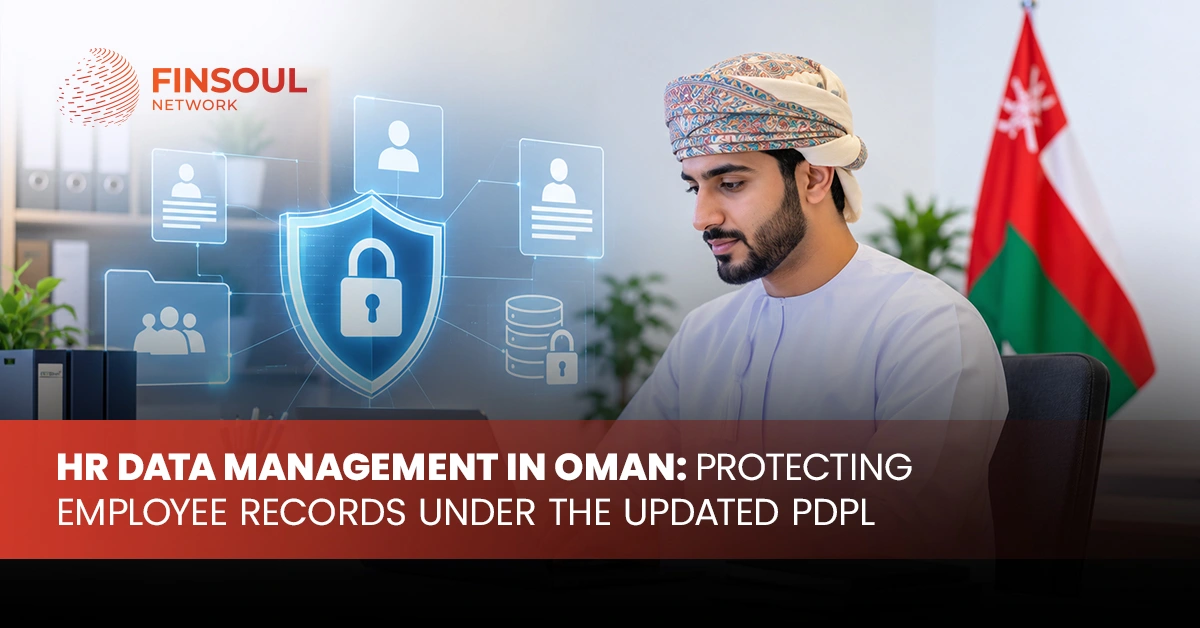

HR Data Management in Oman: Protecting Employee Records Under the Updated PDPL
Employee records contain confidential information, including identification documents, employment contracts, salary details, bank information, medical records and performance reports. Organisations need effective systems to manage these records, protect employee privacy and meet Oman’s data protection requirements.
HR data management in Oman has gained greater importance following the amendments to the Personal Data Protection Law (PDPL) under Royal Decree 68/2026. Employers need to review how they collect, store, process, share and retain employee information. Proper employee data protection in Oman also requires clear internal policies, restricted access and secure HR systems.
Understanding Oman’s Updated Personal Data Protection Law
Oman’s Personal Data Protection Law was introduced through Royal Decree 6/2022, with its Executive Regulations issued under Ministerial Decision 34/2024. Royal Decree 68/2026 introduced amendments that businesses need to consider when managing personal information.
These changes are particularly relevant to HR departments because employee information is collected and processed throughout recruitment, employment, payroll administration and employee separation.
Employee Data Processing for Internal Business Operations
The amended Article 5 bis allows organisations to process employee personal data for managing internal business operations, subject to specific conditions.
Organisations need to ensure that:
- Processing takes place within the framework of organising internal work.
- Employee information is processed in accordance with the PDPL.
- Employee personal data is not disclosed to third parties without the employee’s written consent.
Changes to Consent Requirements
The amended law also introduces Article 10 bis, which identifies circumstances in which personal data can be processed without explicit consent. These include processing necessary to fulfil a legal obligation or perform a contract involving the data subject, subject to the conditions of the law.
For employers, this is relevant to routine employment administration. HR departments need to review employment contracts, privacy notices and internal procedures to establish the appropriate legal basis for processing employee information.
Automated Processing and Employee Decisions
The amendments introduce requirements relating to automated processing of personal data. Organisations need appropriate safeguards to protect privacy and confidentiality and prevent harm to individuals.
Employees also have the right to object to decisions resulting from automated processing. Relevant organisations need procedures for human involvement when reviewing challenged decisions.
Employee Data Retention and Deletion
The amended Article 15 requires organisations to erase personal data when the purpose of processing has ended. Exceptions apply when a dispute exists or retention is necessary to fulfil a legal obligation, court order or judgment.
HR departments need retention schedules that identify which records must be retained, when they need review and when information can be securely deleted.
Why Employee Data Protection in Oman Matters
Employee data protection in Oman is an important part of regulatory compliance and responsible workforce management. HR departments handle confidential information that can create financial, legal and reputational risks when accessed or disclosed without authorisation.
Common employee records include:
Data category | Examples |
Personal identification | Full name, Civil ID, passport details and contact information |
Employment information | Contracts, job titles, department and employment history |
Payroll records | Salary, allowances, deductions and bank details |
Attendance information | Working hours, leave applications and absence records |
Performance records | Appraisals, disciplinary reports and training history |
Health information | Medical certificates and occupational health records |
Digital information | Login credentials, access logs and system activity |
Key HR Data Management Practices for Oman Businesses
Effective HR data management requires clear policies and consistent procedures. Businesses need to control how employee information enters their systems, who can access it and how long it remains in company records.
1. Establish an Employee Data Protection Policy
A written policy defines how the organisation collects, uses, stores, shares and retains employee information. It also explains the responsibilities of HR staff, managers and other authorised personnel.
The policy needs to cover:
- Types of employee information collected
- Purposes of data collection and processing
- Internal access permissions
- Third-party information-sharing arrangements
- Employee privacy rights and request procedures
- Data retention and deletion requirements
- Security controls and breach reporting
- Responsibilities of HR personnel
2. Restrict Access to Employee Records
Employee information needs to remain accessible only to authorised individuals. Payroll personnel, HR managers and department heads have different responsibilities, so their access permissions need to reflect their roles.
Businesses can introduce:
- Individual user accounts and secure authentication
- Role-based access permissions
- Multi-factor authentication for sensitive systems
- Regular access reviews
- Secure document storage
- Immediate access removal when employees leave or change positions
3. Secure Digital and Physical Employee Files
HR information is stored in HR management software, payroll platforms, email accounts, shared drives and physical filing cabinets. Each storage method requires suitable security measures.
Digital systems need secure access controls, encryption where appropriate, backups and activity monitoring. Physical records need restricted storage, controlled access and secure disposal procedures.
4. Manage Third-Party HR and Payroll Providers
Many organisations outsource payroll processing, recruitment, employee benefits administration and HR technology services. These arrangements involve sharing employee information with external providers.
Before appointing a provider, businesses need to establish:
- What employee information the provider will receive
- Why the information is needed
- Who can access the records
- How the provider protects personal information
- What confidentiality and security obligations apply
- How incidents and data requests will be handled
5. Introduce Data Retention and Secure Disposal Procedures
Employee records need to be retained for legitimate employment and legal purposes. However, keeping personal information indefinitely without a valid reason increases exposure.
HR teams need a retention schedule for recruitment records, employment contracts, payroll documents, attendance records, performance reports and employee exit documentation.
When information no longer needs to be retained, businesses need secure disposal procedures. Digital records require appropriate deletion methods, while confidential paper documents need secure destruction.
Oman PDPL Compliance for Sensitive Employee Information
Oman PDPL compliance requires additional attention when organisations process sensitive personal data. The law identifies categories such as health information, biometric data, genetic data, racial origin, sexual life, political or religious opinions and information related to criminal convictions.
Article 5 establishes permit requirements for processing sensitive personal data, subject to applicable exceptions and amendments. Employers need to assess the type of information, processing purpose and relevant legal conditions before collecting or using sensitive employee records.
Examples include:
- Medical reports and occupational health records
- Biometric attendance information
- Health details submitted for workplace accommodation
- Background-check information involving criminal convictions
Employee Rights Under Oman’s PDPL
Employees are data subjects under the law and have rights relating to the personal information organisations hold about them. HR departments need a clear process for receiving and handling employee requests.
Important rights include:
- Withdrawal of consent: Employees can withdraw consent when consent is the applicable basis for processing.
- Correction of information: Employees can request corrections to inaccurate or outdated records.
- Access to personal data: Employees can request a copy of their processed information.
- Data transfer: Employees can request the transfer of personal information to another controller, subject to applicable procedures.
- Erasure: Employees can request deletion of their information in accordance with legal requirements and retention obligations.
- Breach notification: Employees have rights to receive notifications of relevant personal data breaches.
Managing Employee Data Breaches in Oman
A data breach involving employee records can expose identity documents, payroll details, medical information and confidential employment records. Common causes include compromised email accounts, stolen devices, unauthorised access, phishing attacks and accidental disclosure.
Under the Ministry’s published guidance, controllers must notify the Ministry within 72 hours of becoming aware of a breach that threatens the rights of affected data subjects. Affected individuals must also be notified within 72 hours when a breach poses serious harm or high risk.
Businesses need an incident response procedure covering:
- Identify the incident: Determine what happened and which employee records were affected.
- Contain the breach: Restrict unauthorised access and prevent further disclosure.
- Assess the risk: Identify the information exposed and potential consequences for employees.
- Notify relevant parties: Follow applicable Ministry and employee notification requirements.
- Document the incident: Maintain records of the investigation, decisions and corrective actions.
- Improve security: Address weaknesses and update internal controls to prevent recurrence.
Cross-Border Transfers of Employee Information
International businesses frequently use overseas HR platforms, cloud storage systems and payroll providers. These arrangements can involve transferring employee information outside Oman.
The PDPL and its Executive Regulations establish conditions for cross-border transfers. Organisations need to assess the protection available in the recipient country and comply with applicable consent and approval requirements. Transfers involving sensitive personal data also need additional regulatory attention.
Before selecting an overseas HR technology provider, businesses need to establish where employee records are stored, which parties can access them and what safeguards protect the information.
HR Data Management Checklist for Oman Businesses
Businesses can use the following checklist to review their employee record management procedures.
HR management area | Recommended action |
Data collection | Identify employee information collected and document its purpose |
PDPL compliance | Review applicable legal requirements and processing conditions |
Employee privacy | Explain how personal information is handled |
Access controls | Restrict records to authorised personnel |
Sensitive information | Apply additional safeguards and assess permit requirements |
Third-party sharing | Review provider access and consent requirements |
Data retention | Establish retention periods and secure deletion procedures |
Data security | Protect HR systems, backups, email accounts and physical files |
Breach response | Maintain incident reporting and notification procedures |
Cross-border transfers | Assess destination-country protection and applicable approvals |
Staff training | Train HR teams and managers in secure data handling |
How HR Data Management Supports Human Resource Management
Effective human resource management depends on accurate employee information and organised administrative processes. Secure HR records help businesses manage workforce responsibilities while protecting employee confidentiality.
A well-managed HR system supports:
- Accurate payroll administration: Reliable salary and employment records reduce payment and deduction errors.
- Workforce planning: Organised employee information supports staffing and resource allocation decisions.
- Performance management: Managers can access relevant performance information through controlled systems.
- Recruitment administration: Secure candidate records improve recruitment workflows and information handling.
- Management reporting: Accurate HR information supports workforce analysis and operational decisions.
- Regulatory readiness: Documented procedures help demonstrate responsible employee data management.
HR Consulting Support from Finsoul Network Oman
Managing employee information under Oman’s updated PDPL requires coordinated HR policies, secure systems and consistent administrative procedures. Businesses need effective workforce management practices that protect employee confidentiality while supporting recruitment, payroll coordination, performance management and workforce planning.
Finsoul Network Oman provides HR consulting and human resource management support to help organisations improve HR administration and workforce operations. Explore its HR consulting services in Oman for support with workforce planning, talent management and organisational development.
FAQs
1. What is HR data management in Oman?
HR data management involves collecting, organising, storing, processing and protecting employee information throughout the employment lifecycle. It includes employment contracts, payroll records, attendance information, performance reports and other personal data.
2. What does Oman’s updated PDPL mean for employee records?
Royal Decree 68/2026 introduced Article 5 bis, which allows organisations to process employee personal data for internal business operations subject to specific conditions. These include compliance with the law and restrictions on third-party disclosure without written employee consent under that provision.
3. How can businesses improve employee data protection in Oman?
Businesses can improve employee data protection by establishing written policies, restricting access to HR records, securing digital and physical files, reviewing third-party providers, applying retention schedules and training employees in responsible data handling.
4. How can HR departments maintain Oman PDPL compliance?
HR departments need to identify the personal information they process, establish appropriate legal grounds, protect sensitive records, manage employee requests, review external data-sharing arrangements and follow applicable breach notification and retention requirements.
5. Why should businesses work with HR consultants in Oman?
HR consultants in Oman help organisations improve workforce planning, recruitment, employee administration and HR policies. Professional HR support also helps businesses organise employee records and establish consistent management procedures.
Table of Contents
Book An Appointment
No Comments