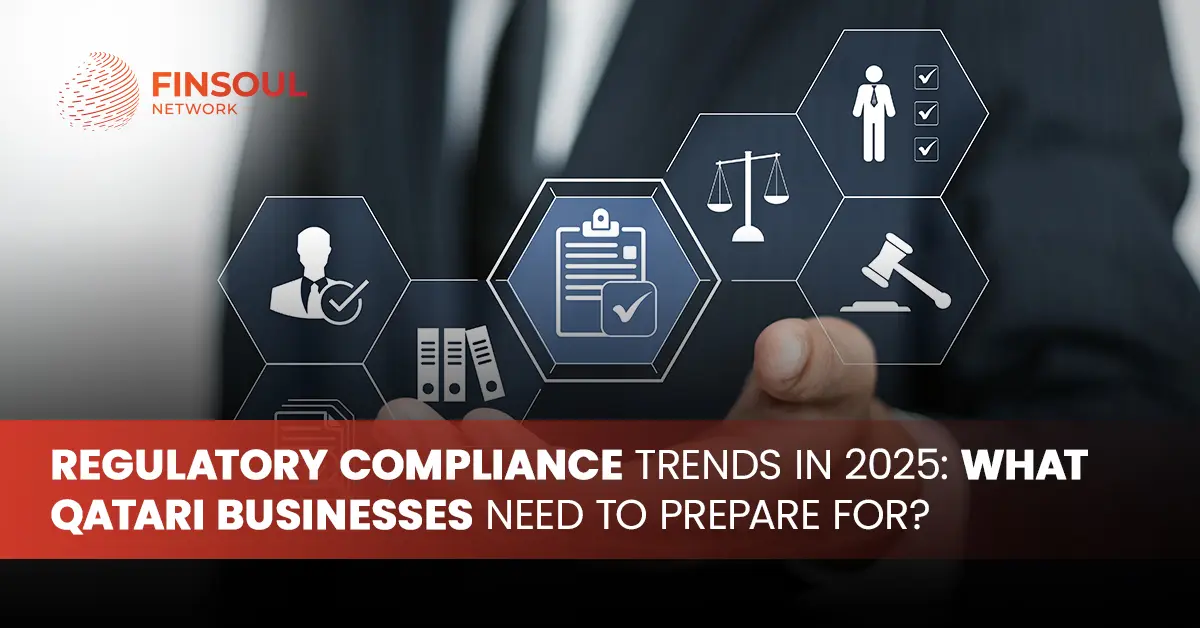

Regulatory Compliance Trends in 2025: What Qatari Businesses Need to Prepare For?
In today’s global economy, one word can determine the success or downfall of a business: compliance. Companies across various industries face mounting pressure to comply not only with local regulations but also with international standards. In Qatar, this pressure is increasing as the country aligns its business landscape with global best practices while pursuing its ambitious Qatar National Vision 2030.
The year 2025 is set to be a pivotal one. From digital reporting requirements to stricter corporate governance rules, the compliance landscape is evolving faster than ever before. Businesses that fail to adapt risk more than just penalties; they risk losing investor trust, operational efficiency, and long-term growth opportunities.
The Rise of Digital Compliance and E-Reporting
Gone are the days when compliance meant piles of paperwork. Regulatory authorities are increasingly embracing digitalization, and Qatar is no exception. In 2025, businesses can expect greater emphasis on electronic submissions, automated reporting, and real-time data monitoring.
Imagine a scenario where an error in VAT reporting is detected instantly by the system. While this reduces manual mistakes, it also means businesses need strong IT and accounting systems in place. Companies that digitize early will find compliance smoother, while those that lag may face operational challenges.
Table of Contents
Stricter Focus on ESG Reporting
Globally, Environmental, Social, and Governance (ESG) reporting is no longer optional; it’s becoming mandatory. Investors and regulators want to see how businesses are contributing to sustainability and responsible governance.
For Qatari firms, this means that 2025 will bring tighter rules around ESG disclosure. Companies that ignore these demands may not only face regulatory penalties but also miss out on funding and partnership opportunities. For example, international investors increasingly require ESG reports before committing capital.
In other words, compliance is no longer just about avoiding fines, it’s about staying competitive in a responsible world.
Alignment with International Accounting Standards
As Qatar continues integrating with the global financial system, companies are expected to comply with International Financial Reporting Standards (IFRS). In 2025, we see more rigorous enforcement of these standards, ensuring greater transparency and comparability across markets.
For businesses, this trend means a dual challenge: adapting to complex accounting requirements while training teams to keep up with international practices. But the reward is substantial, enhanced credibility with global investors and partners.
Increasing Penalties for Non-Compliance
Regulatory bodies worldwide are moving toward a stricter penalty regime, and Qatar is following suit. In 2025, we can expect higher fines, stricter sanctions, and reputational consequences for businesses that fail to meet compliance obligations.
The message is clear: “ignorance of the law is no excuse.” Businesses that treat compliance as an afterthought may find themselves facing serious consequences. On the other hand, those that proactively strengthen compliance frameworks can turn this challenge into a competitive edge.
Data Privacy and Cybersecurity Compliance
As businesses rely more on digital platforms, regulators are paying close attention to data protection laws. With the global rise of data breaches, 2025 will see Qatar enforcing stricter data privacy measures.
For example, businesses may be required to implement stronger cybersecurity policies, encrypt sensitive information, and comply with international data protection regulations. This trend particularly affects companies in finance, healthcare, and e-commerce.
The takeaway? At Finsoul Network Qatar, Compliance now extends beyond financial reporting; it includes protecting customer trust in the digital age.
Sector-Specific Regulatory Updates
Not all industries face the same compliance challenges. In 2025, Qatar is expected to roll out sector-specific guidelines, particularly for financial services, construction, and energy. Businesses in these sectors should be prepared for the best-designed reporting requirements, performance monitoring, and environmental accountability.
This means that “one-size-fits-all” compliance strategies won’t work anymore. Instead, businesses must adopt customized frameworks to meet industry-specific demands.
What This Means for Qatari Businesses
For business leaders in Qatar, these trends signal one thing: compliance is becoming a strategic priority, not a side task. Companies that act now will find themselves ahead of the curve, while those that delay will struggle to catch up.
Here are three practical steps to prepare:
- Invest in digital systems to automate reporting and data management.
- Train employees regularly to keep them updated on regulatory changes.
- Partner with experts like Finsoul Network Qatar, who can guide you through complex compliance frameworks.
Conclusion: Compliance as a Pathway to Growth
Regulatory compliance in 2025 is not just about avoiding penalties; it’s about building trust, attracting investors, and strengthening long-term resilience. By embracing trends such as digital reporting, ESG disclosure, data protection, and sector-specific regulations, Qatari businesses can transform compliance into a strategic advantage.
At Finsoul Network Qatar, we help businesses stay ahead of these trends by offering the best-designed compliance and reporting services. From digital transformation to ESG frameworks, our team ensures your business is not just compliant but also competitive in Qatar’s evolving economy.
The future of compliance is already here. The question is: Is your business ready?
No Comments