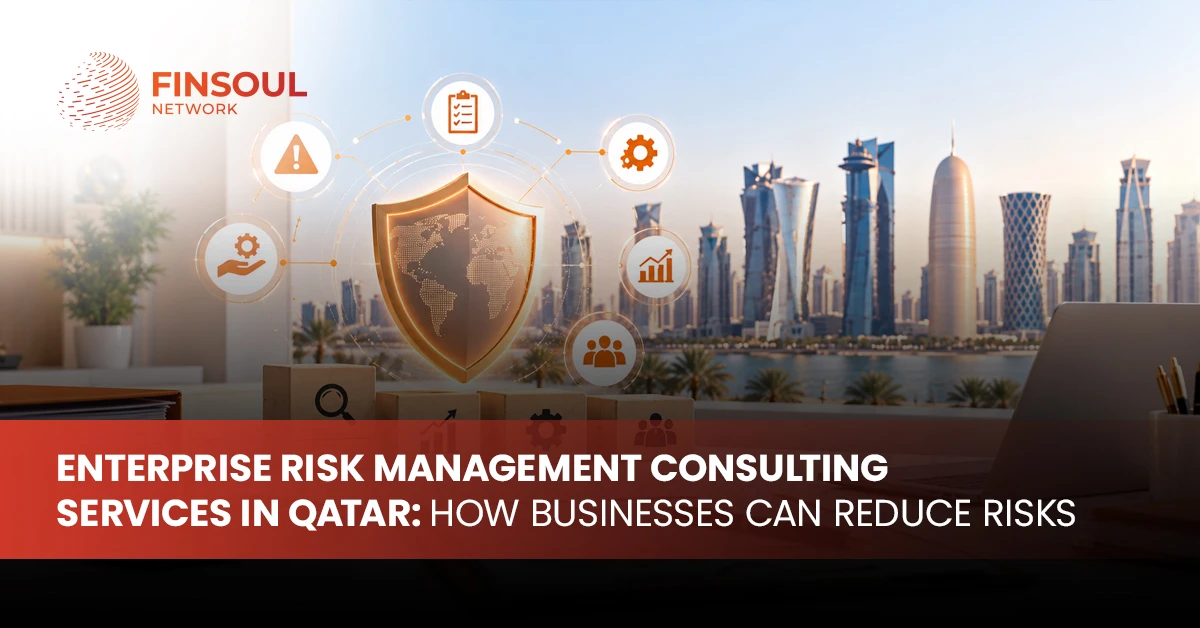
Enterprise Risk Management Consulting Services in Qatar: How Businesses Can Reduce Risks
A delayed customer payment, a sudden increase in supplier costs, a cyberattack, or a change in regulatory requirements can affect a business far beyond the department where the problem begins. Without a clear process for identifying and assessing these risks, management may discover their impact only after losses have occurred.
Enterprise risk management brings financial, operational, legal, technology, and compliance risks into one process. Enterprise risk management consulting services help businesses identify threats, assess their potential impact, assign responsibility, and decide which controls or actions are needed.
For companies operating in Qatar, the right approach depends on their industry, size, ownership, contracts, and regulatory obligations. Finsoul Network Qatar lists enterprise risk management services covering risk assessment and risk management frameworks. Businesses should confirm the specific deliverables and scope before appointing a provider.
What Is Enterprise Risk Management?
Enterprise risk management (ERM) is a structured way to identify, evaluate, respond to, and monitor risks across an organisation. Instead of treating each problem separately, it examines how risks affect business objectives and how one event might trigger other problems.
For example, a construction company may face rising material costs, delays from subcontractors, workplace safety concerns and late customer payments. These risks are connected: a delayed project can increase costs, postpone invoicing and create cash-flow pressure. An ERM process helps management assess these links and plan responses.
The ISO 31000 risk management guidelines describe principles and guidance for managing risk across different types of organisations. ISO 31000:2018 remains the published edition confirmed by ISO in 2023. It is a guidance standard, not a certifiable management system standard.
Why Risk Management Matters for Businesses in Qatar
Businesses in Qatar operate across sectors including construction, energy, financial services, logistics, healthcare, retail and professional services. Each sector has different exposures, so a useful risk plan must reflect the company’s actual activities rather than rely on a generic list.
Financial pressure and cash flow
Late customer payments, rising costs, currency exposure and poor credit decisions can place pressure on working capital. Management should monitor cash forecasts, customer concentration, overdue invoices and major payment commitments.
Operational disruption
Equipment failures, supplier delays, staff shortages and weak procedures can interrupt day-to-day operations. Companies should identify critical activities, assess their dependencies and decide how essential services will continue if normal operations are disrupted.
Regulatory and contractual obligations
A company may have obligations under its commercial contracts, licences, employment requirements, data protection rules or sector-specific regulations. The relevant requirements depend on the business and its activities. Financial institutions, for example, face regulatory expectations that do not automatically apply to every trading or service company.
Technology and information security
Unauthorised system access, data loss, phishing and technology outages can affect customer information, operations and reputation. Risk reviews should consider who has access to important systems, how data is backed up and how the company would respond to an incident.
Reputation and business continuity
A safety incident, service failure or unresolved customer complaint may affect future sales and business relationships. A continuity plan identifies essential services, responsible staff, communication arrangements and recovery priorities.
What Do Enterprise Risk Management Consulting Services Include?
The scope should reflect the risks that could prevent a company from meeting its objectives. A typical engagement may include several of the following activities.
Risk identification and assessment
The first step is to identify what could go wrong, what could cause it and which business objectives might be affected. Consultants may review business plans, financial reports, contracts, operational procedures and interviews with department managers.
Each risk is then assessed using agreed criteria, such as its likelihood and potential impact. This allows management to distinguish urgent issues from risks that need routine monitoring.
Risk register and prioritisation
A risk register records the main risks, their causes, possible consequences, existing controls and assigned owners. It should also include planned actions, deadlines and a record of changes.
A practical register might identify dependence on one major supplier as a high-priority risk. The response could include finding alternative suppliers, reviewing stock requirements and monitoring delivery performance.
Risk controls and response plans
Once risks have been assessed, the business decides how to respond. Common options include avoiding an activity, reducing the likelihood or impact of a risk, transferring certain financial consequences through insurance or contracts, or accepting the risk where the exposure is within approved limits.
The response should identify who will act, what resources are needed and how management will judge whether the control works.
Reporting and ongoing monitoring
Risks change as the company grows, takes on new contracts, enters new markets or adopts new technology. Reporting arrangements should therefore identify when a risk needs to be reviewed and who must be informed if its status changes.
Enterprise risk management consulting services may also cover management reporting, risk indicators, staff responsibilities and periodic reviews. The exact work should be agreed in writing rather than assumed to be part of every engagement.
How to Build an Enterprise Risk Management Framework
An ERM framework gives the business a repeatable method for handling risk. The COSO Enterprise Risk Management framework connects risk with strategy-setting and business performance. It is one recognised reference point; the most suitable framework depends on the organisation’s needs. A practical implementation process includes these steps:
- Set objectives and scope. Identify the company’s main goals, the business units covered and the people responsible for approving risk decisions.
- Identify risks. Gather information from management, employees, financial records, contracts and operational data.
- Assess and rank risks. Agree on likelihood and impact criteria, then prioritise risks that could cause serious financial, operational or compliance problems.
- Review existing controls. Check whether current procedures reduce the risk and whether staff follow them consistently.
- Assign actions and owners. Record the required response, responsible person, resources and target date.
- Monitor and report. Set review dates and reporting thresholds so management receives timely information when risk exposure changes.
The framework should fit the company’s size. A smaller business may begin with a risk register, a cash-flow review and clear approval responsibilities. A larger group with several business units may need formal reporting arrangements, common assessment criteria and oversight at board level.
Understanding Financial Risk Management
Financial risk management focuses on risks that affect a company’s cash, earnings, assets and financial commitments. It forms part of ERM but does not cover every operational or regulatory exposure. For a Qatar-based business, relevant financial risks may include:
- Credit risk: Customers fail to pay invoices on time or default on outstanding balances.
- Liquidity risk: The company lacks sufficient cash to meet payroll, supplier payments or debt commitments when due.
- Market risk: Exchange rates, interest rates or commodity prices affect costs or income.
- Concentration risk: A large share of revenue depends on one customer, supplier, market or contract.
- Fraud and reporting risk: Weak approvals or reconciliations allow errors, unauthorised payments or inaccurate reporting to go undetected.
Management can monitor these risks through cash-flow forecasts, ageing reports, bank reconciliations, contract reviews and approval controls. Financial institutions may face additional requirements under their applicable regulatory frameworks, so businesses should confirm the rules relevant to their own sector.
How to Choose an Enterprise Risk Management Consultant
Businesses comparing enterprise risk management consulting firms should look beyond the provider’s service description. The important question is whether the proposed work addresses the organisation’s risks and produces clear, usable outputs. Before appointing a provider, ask:
- What risks and business units are included in the review?
- Which framework or assessment method will guide the work?
- What documents, interviews and tests will be used to assess controls?
- Will the deliverables include a risk register, prioritised action plan and management report?
- Who will be responsible for implementing the recommendations?
- Are fees, exclusions, delivery dates and any use of network firms stated in writing?
A risk management consultant should also explain the limits of the engagement. An advisory review does not automatically certify regulatory compliance, guarantee that losses will not occur or replace legal advice where legal interpretation is required.
When Are Enterprise Risk Management Consulting Services Useful?
An external review may be useful when a business is expanding, entering a new market, taking on a large contract, changing its operating model or dealing with repeated control failures. It can also help management establish a formal risk process where responsibilities have previously been informal.
The timing depends on the company’s circumstances. A business does not need to wait for a major loss before reviewing its risk exposure. It should reassess risks whenever important changes affect its operations, finances, suppliers, customers or regulatory responsibilities.
Conclusion
Risk management works best when responsibility is clear and decisions are based on evidence. Businesses should identify their main exposures, test whether existing controls work and assign owners to the actions needed to reduce risk.
Finsoul Network Qatar lists enterprise risk management consulting services for businesses reviewing risk assessment and management processes. Before engaging a provider, confirm the scope, deliverables, fees and reporting arrangements, then ensure management has the authority and resources to implement the agreed actions.
Address: 5th Floor, Gath Building, Salwa Road, Doha, Qatar
Number: +973 3383 2422
Email: info@finsoulnetwork.com
FAQs
What do enterprise risk management consulting services include?
They may include risk identification, risk assessment, risk registers, control reviews, response planning and management reporting. The final scope depends on the company’s activities and the objectives agreed with the consultant.
Is enterprise risk management mandatory for every business in Qatar?
There is no single ERM requirement that applies identically to every business in Qatar. Obligations depend on the company’s sector, legal structure, and relevant regulatory rules. Businesses should check the requirements that apply to their specific activities.
What is the difference between ERM and financial risk management?
ERM covers risks across the organisation, including operational, compliance, technology, and financial risks. Financial risk management focuses on exposures such as credit, liquidity, exchange rates, and cash flow.
How often should a company review its risks?
A company should review risks regularly and whenever a significant change occurs, such as a major contract, new market entry, supplier disruption, or change in regulation. Higher-priority risks may need more frequent monitoring than lower-impact issues.
What should a risk management report contain?
A useful report identifies each major risk, its potential impact, existing controls, the person responsible, planned corrective action, and the target review date. It should also explain which risks require management attention first.
Table of Contents
Book An Appointment
No Comments