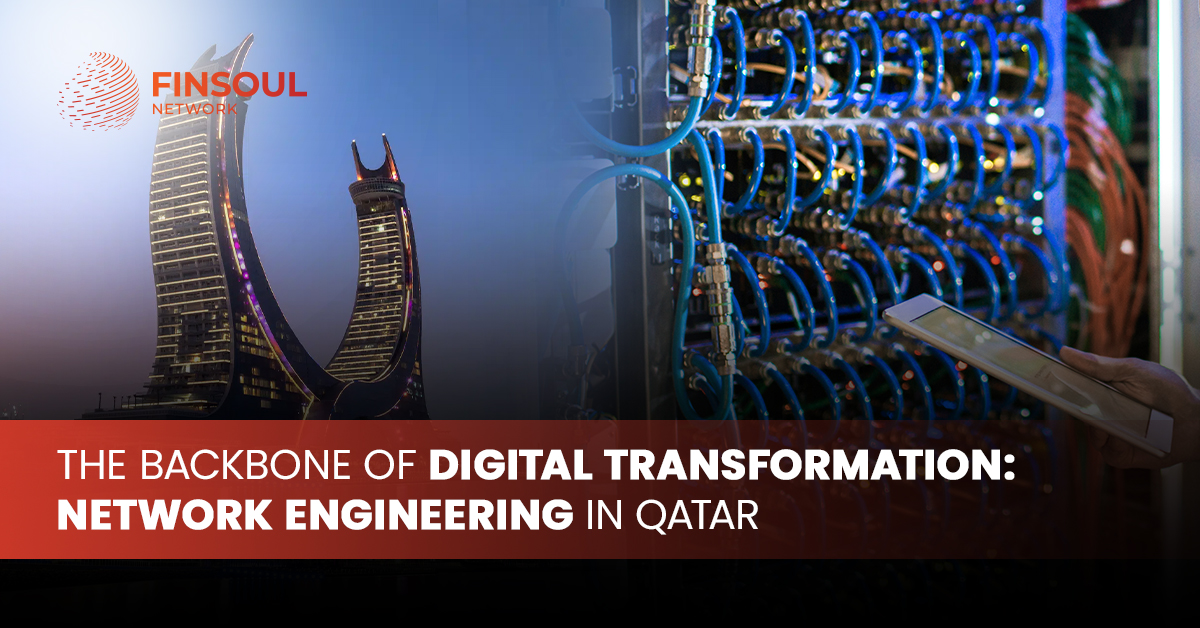

The Backbone of Digital Transformation: Network Engineering in Qatar
In today’s rapidly evolving digital economy, the success of every organization, whether in finance, energy, healthcare, retail, or government, depends on robust, reliable, and secure network infrastructure.
Qatar, with its ambitious Vision 2030 and major investments in smart cities, cloud computing, and digital transformation, is no exception. At the core of this technological evolution lies network engineering, the backbone that enables enterprises to seamlessly adopt innovations such as artificial intelligence (AI), Internet of Things (IoT), 5G, cloud services, and big data analytics.
Without efficient network engineering, businesses in Qatar risk slow performance, connectivity breakdowns, and vulnerability to cyber threats. For enterprises that aim to lead in the digital-first economy, network engineering is not just a technical necessity; it is a strategic priority.
What Is Network Engineering?
Network engineering refers to the design, deployment, optimization, and maintenance of communication systems that allow data and digital services to flow seamlessly across organizations.
It ensures that the IT infrastructure is resilient, reliable, and secure enough to support business operations and future growth. In practice, network engineering involves:
- Network design & architecture: creating a blueprint that aligns with enterprise goals.
- Implementation & integration: deploying routers, switches, firewalls, cloud, and wireless networks.
- Performance optimization: ensuring low latency, high availability, and reliability.
- Cybersecurity integration: embedding security measures into every layer of the network.
- Monitoring & maintenance: proactively identifying and resolving issues.
For Qatar, where enterprises are investing heavily in smart grids, e-government, fintech, and advanced industries, these functions are mission-critical.
Table of Contents
Why Network Engineering Is The Backbone Of Digital Transformation In Qatar
1. Enabling Seamless Connectivity For A Digital Economy
Digital transformation relies on uninterrupted connectivity. Whether it’s an oil and gas company analyzing seismic data in real time or a financial institution running digital banking services, a secure and high-speed network is essential. Network engineers ensure that enterprises in Qatar can manage vast amounts of data without downtime, supporting mission-critical operations.
2. Supporting Smart Cities And Qatar Vision 2030
Qatar has been at the forefront of smart city development, with Lusail City being a prime example of digital-first urban planning. Smart homes, intelligent transportation, IoT-enabled energy systems, and digital governance all depend on strong networking infrastructure. Network engineering ensures that these systems are interconnected, scalable, and future-ready.
3. Empowering Cloud And Hybrid IT Infrastructure
The adoption of cloud computing in Qatar has surged, with both private and government sectors shifting workloads to cloud and hybrid platforms. But cloud services are only as good as the network infrastructure that connects them. Network engineers design secure, optimized, and low-latency networks that enable enterprises to fully leverage cloud scalability and cost savings.
4. Enhancing Cybersecurity Resilience
As Qatari enterprises digitize, cyber threats have become a top concern. Hackers exploit weak network points to gain unauthorized access to sensitive data. Network engineering integrates firewalls, intrusion detection systems, VPNs, and zero-trust architectures to fortify digital ecosystems against ever-evolving cyber threats.
5. Facilitating AI, IoT, And 5G Adoption
From predictive analytics to autonomous vehicles, emerging technologies require a robust backbone to process and transmit data at lightning speed. Network engineers make it possible for enterprises to integrate AI-driven applications, IoT devices, and 5G technologies seamlessly. For Qatar’s industries, this means smarter factories, advanced healthcare systems, and more efficient supply chains.
Key Benefits Of Network Engineering For Qatari Enterprises
- Reliability: Networks designed by professionals can grow alongside the business, accommodating new users, locations, and applications.
- Operational Efficiency: Optimized networks reduce downtime and ensure business continuity.
- Data Security: Secure designs reduce vulnerability to data breaches and cyberattacks.
- Cost Optimization: Proactive monitoring reduces maintenance costs and unplanned outages.
- Future-Proofing: Enterprises stay ready for next-gen technologies without constant overhauls.
Network Engineering Challenges In Qatar
Despite its immense potential, enterprises in Qatar face several challenges when it comes to network infrastructure:
- Rising Cybersecurity Risks: Hackers are increasingly targeting Middle Eastern enterprises, demanding stronger network defenses.
- Complex IT Ecosystems: Many organizations struggle with integrating legacy systems with modern, cloud-driven networks.
- High Data Demands: Growing reliance on AI, IoT, and analytics requires networks to process massive volumes of real-time data.
- Skilled Workforce Shortages: There is still a gap in specialized network engineering talent locally, making consulting services crucial.
To overcome these obstacles, Qatari enterprises are increasingly turning to specialized network engineering consulting firms like Finsoul Network for guidance and execution.
How Finsoul Network Transforms Businesses In Qatar
Finsoul Network Qatar being a network engineering consulting enterprise go beyond basic IT support. We provide enterprises with:
- Top network designs that align with industry-specific needs.
- Integration of cloud and hybrid IT systems with minimal disruption.
- End-to-end cybersecurity frameworks embedded into the network.
- Proactive monitoring and automation to reduce downtime.
- Strategic planning for scaling networks in line with business growth.
For example, a hospital in Qatar can utilize consulting services to build a network that supports telemedicine, patient data security, and IoT-enabled medical devices, all while ensuring compliance with healthcare regulations.
Network Engineering And The Future Of Qatar’s Digital Economy
Looking ahead, Qatar’s enterprises must prepare for an era where data is the most valuable currency. With the acceleration of AI, 5G-enabled industries, and cross-border digital trade, the role of network engineering will become even more critical.
In the near future, we can expect:
- AI-driven networks that self-heal, adapt, and predict failures before they occur.
- Zero-trust architectures becoming the norm across all enterprises.
- Integration of satellite internet and next-gen 6G networks to expand reach.
- Greater focus on sustainability, with green data centers and energy-efficient networks.
For Qatari enterprises, the ability to adopt these advancements will depend on the strength and resilience of their network infrastructure.
Final Thoughts
Network engineering is more than an IT function; it is the backbone of Qatar’s digital transformation journey. As enterprises in Qatar continue to innovate, expand globally, and embrace disruptive technologies, improved and secure networks will determine their competitiveness.
From enabling smart cities and secure cloud adoption to supporting AI, IoT, and 5G, network engineering is the invisible force that powers the nation’s economic future.
For Qatari enterprises looking to stay ahead in the digital era, investing in advanced network engineering and leveraging the expertise of professional consulting services is not just an option, but a necessity. Get expert Network engineering services with our professional guidance at Finsoul Network Qatar. Book a consultation now to know more about our services.
No Comments
Recent Blogs