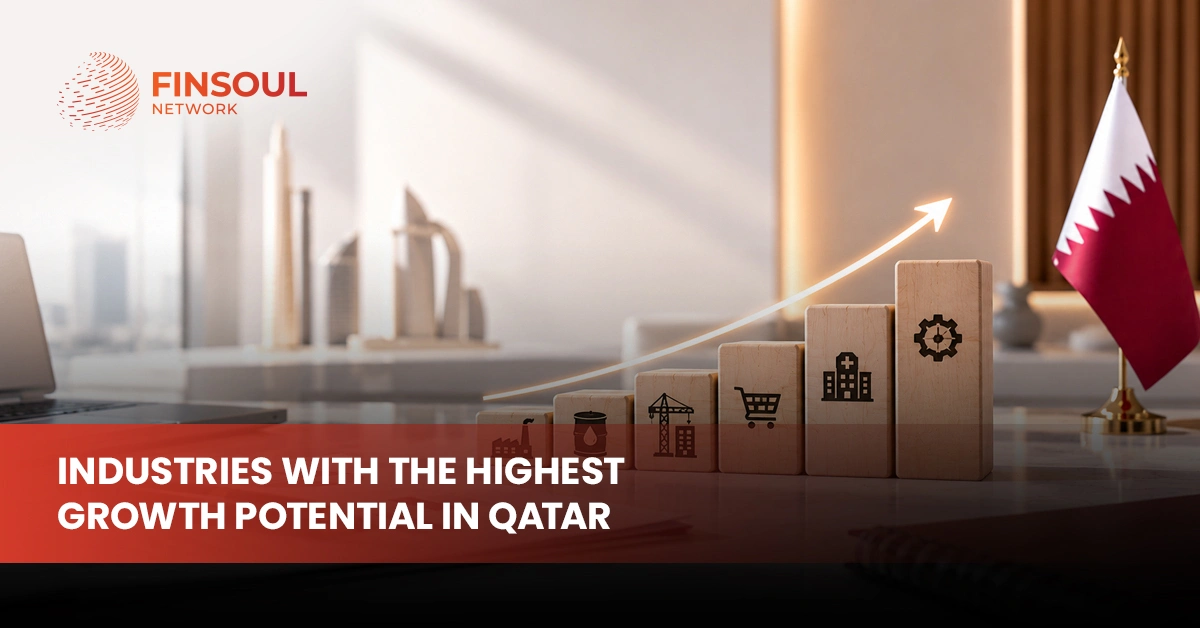

Industries with the Highest Growth Potential in Qatar
Qatar’s economy has entered a new phase after the FIFA World Cup. The country built world-class stadiums, transport networks, and hospitality infrastructure for the tournament, and now it is using that same momentum to build a stronger, more diversified economy. The government is shifting focus away from oil and gas revenue and pushing hard into sectors like technology, healthcare, logistics, and manufacturing.
For investors and business owners, this shift matters. A country moving from a single-resource economy to a multi-sector one opens doors that did not exist a decade ago. Companies entering Qatar today also need to think about international standards and certifications early, and this is where firms like Finsoul Network Qatar come into the picture, helping businesses align with global quality, safety, and management requirements before they even start operations.
Why Qatar Is Becoming a Global Business Destination
Qatar is rapidly positioning itself as a hub for international trade and investment, driven by economic diversification and world‑class infrastructure. Strategic reforms and global partnerships are transforming its business environment into one of the most attractive in the region.
Strong Economic Fundamentals
Qatar holds one of the highest GDP per capita figures in the world, backed by massive natural gas reserves and a stable fiscal position. Low public debt and consistent trade surpluses give the government room to fund large-scale development projects without straining the economy.
Government Diversification Strategy
Qatar’s leadership has been public about reducing dependence on hydrocarbons. State investment is now flowing into technology parks, healthcare facilities, logistics corridors, and manufacturing zones at a pace rarely seen in the region.
Qatar National Vision 2030
This national framework sets clear goals across four pillars: human, social, economic, and environmental development. Almost every major project announced in Qatar today is measured against how well it supports this vision, and businesses that align with it tend to receive faster approvals and stronger institutional support.
Business-Friendly Investment Policies
Qatar allows 100% foreign ownership in most sectors, offers tax exemptions in free zones like Qatar Financial Centre and Qatar Free Zones, and has simplified company registration procedures considerably compared to a decade ago.
Modern Infrastructure Supporting Growth
Hamad International Airport, Hamad Port, and an expanding metro network give businesses reliable access to global trade routes and local mobility, something that directly reduces operating friction for new companies.
Strategic Location for International Trade
Sitting on the Arabian Gulf, Qatar connects Asia, Africa, and Europe within a few hours of flight time, making it a natural base for regional distribution and trade operations.
How We Identified Qatar’s Fastest Growing Industries
Rather than listing sectors based on popularity, this analysis uses measurable criteria to rank industries by real growth potential:
- Government spending on infrastructure and sector-specific programs
- Foreign investment trends and inflow patterns over the past three years
- GDP contribution from each sector, tracked year over year
- Employment demand and job creation numbers
- Technology adoption rate within the industry
- Market demand from local and expatriate populations
- Export potential to regional and global markets
- Long-term sustainability based on Vision 2030 alignment
Energy and Renewable Energy
Qatar’s energy sector continues to anchor national revenue, with LNG exports driving global leadership even as diversification accelerates. Alongside gas, renewable and clean energy investments are reshaping the country’s long‑term growth outlook.
- LNG Expansion Projects: The North Field expansion will substantially boost production capacity by the late 2020s, creating opportunities for contractors, engineering firms, and supply chain partners.
- Renewable Energy Investments: Solar projects like Al Kharsaah highlight Qatar’s commitment to clean energy alongside its gas business.
- Hydrogen and Clean Energy Opportunities: Green and blue hydrogen initiatives position Qatar for future clean fuel exports.
- Investment Potential: High capital requirements but strong returns, especially for EPC firms tied to infrastructure.
- Future Growth Outlook: Energy remains the backbone, with renewables expected to grow faster than traditional oil and gas over the next decade.
Construction and Infrastructure
Qatar’s construction sector remains vibrant even after the World Cup, driven by urban expansion and infrastructure upgrades. Demand continues across residential, commercial, and smart city projects, keeping contractors and suppliers engaged well beyond 2026.
- Smart City Development: Lusail City and similar projects integrate smart infrastructure, from automated traffic systems to energy‑efficient buildings, setting new benchmarks for Gulf urban planning.
- Commercial Projects: Office towers, retail complexes, and mixed‑use developments continue to rise in Doha’s West Bay and other business districts.
- Residential Expansion: Population growth and an expanding expatriate workforce drive steady demand for housing across all price segments.
- Infrastructure Modernisation: Roads, metro lines, and utility networks are continuously upgraded to support Qatar’s growing population and business activity.
- Opportunities for Contractors and Suppliers: Local and international contractors, material suppliers, and specialized subcontractors all have room to grow, particularly firms that can meet evolving compliance and quality standards.
Healthcare and Medical Services
Qatar’s population growth and rising expectations around healthcare quality are fueling demand for private hospitals, specialty clinics, and diagnostic centers. Technology adoption and investment opportunities are reshaping the sector’s future.
- Medical Technology: Hospitals are adopting advanced imaging, robotic surgery systems, and AI‑assisted diagnostics, creating openings for technology suppliers and service providers.
- Digital Healthcare: Telemedicine platforms and electronic health record systems are expanding rapidly, especially after the pandemic reshaped patient access.
- Pharmaceuticals: Local manufacturing and distribution remain underdeveloped, offering strong opportunities for companies willing to establish a presence.
- Healthcare Investment Opportunities: Private clinics, wellness centers, and specialized facilities such as fertility and rehabilitation centers show high return potential given current supply gaps.
- Future Workforce Demand: Qatar will need thousands of additional healthcare professionals, creating parallel opportunities in staffing and training. Providers must also meet international quality benchmarks, and working with Finsoul Network Qatar early helps secure certifications like ISO 9001 and ISO 13485 without delays.
Information Technology and Digital Transformation
Qatar’s digital economy is accelerating as government and private sectors migrate to cloud infrastructure. Investments in AI, cybersecurity, and data centres are reshaping the IT landscape, creating strong opportunities for providers and investors.
- Cloud Computing: Migration to cloud infrastructure is accelerating, with major providers expanding regional data presence to serve Qatar directly.
- Artificial Intelligence: Adoption spans government services, banking, retail, and healthcare, supported by funding for AI research and startup incubation.
- Cybersecurity: Rising digital adoption drives demand for firms capable of protecting critical infrastructure and financial systems.
- Data Centres: Qatar is investing in local capacity to support cloud growth and reduce reliance on external hosting.
- Software Development: Custom software and enterprise solution providers are in high demand as businesses digitize operations.
- Managed IT Services: SMEs increasingly outsource IT operations, creating steady recurring revenue opportunities for service providers.
- Government Digital Transformation Projects: Expanding e‑government initiatives open procurement opportunities for IT firms that can meet compliance standards.
Industries Receiving the Highest Government Support
Qatar’s government continues to channel significant resources into priority industries that align with national diversification goals. Strategic funding, infrastructure, and policy incentives ensure these sectors remain growth engines for the economy.
Industry | Government Support | Investment Demand | Growth Outlook |
Energy and Renewables | Very High | High | Strong |
Healthcare | High | High | Strong |
Technology and Digital | Very High | High | Strong |
Manufacturing | High | Medium | Strong |
Logistics | High | Medium | Strong |
Tourism and Hospitality | Medium | Medium | Moderate |
Agriculture and Food Security | High | Low to Medium | Moderate |
Real Estate | Medium | High | Moderate |
Best Industries for Foreign Investors
Qatar’s diversification strategy creates strong entry points for foreign investors across multiple sectors. High government support, rising demand, and regulatory reforms make these industries particularly attractive for long‑term growth.
Best for Large Investors
Energy infrastructure, large-scale manufacturing, and commercial real estate offer the scale and long-term returns that suit institutional and high-capital investors.
Best for SMEs
Facility management, logistics services, and specialized healthcare clinics offer manageable entry costs with steady demand.
Best for Startups
FinTech, digital health, and AI-driven service platforms benefit from Qatar’s active incubation and sandbox programs for early-stage companies.
Best for Technology Businesses
Cloud services, cybersecurity, and enterprise software firms find strong demand from both government and private sector clients.
Best for Manufacturing Companies
Food processing, building materials, and light industrial manufacturing benefit from Qatar’s local production incentives.
Best for Professional Service Firms
Engineering consultancy, financial advisory, and compliance consulting firms have consistent demand across nearly every growing sector listed above.
Industries with the Lowest Entry Barriers
- Capital requirements: Professional services, digital marketing, and consulting businesses require far less starting capital than manufacturing or energy ventures.
- Licensing complexity: IT services and consulting firms generally face simpler licensing paths compared to healthcare or financial services, which involve stricter regulatory review.
- Market competition: Facility management and HR outsourcing still have relatively open competitive landscapes compared to saturated segments like general trading.
- Time to market: Service-based businesses can typically launch within a few months, while manufacturing and healthcare ventures often require a year or longer due to licensing and infrastructure needs.
- Expected ROI: Professional services tend to show faster breakeven points, while capital-intensive sectors like manufacturing offer higher long-term returns but slower initial payback.
High-Demand Business Opportunities in Qatar
- IT consulting
- ERP implementation
- Cybersecurity services
- Healthcare services
- Facility management
- Logistics and freight forwarding
- Engineering consultancy
- Financial consulting
- Digital marketing
- HR outsourcing
- Renewable energy consulting
Key Growth Drivers Behind Qatar’s Expanding Economy
Qatar’s economy continues to expand on the back of strategic diversification, infrastructure investment, and innovation. Government support and global partnerships ensure sustained growth across multiple industries.
Population Growth
Qatar’s population continues to grow, largely driven by an expanding expatriate workforce supporting new projects and industries.
Government Spending
Consistent public investment across infrastructure, healthcare, and technology keeps multiple sectors growing simultaneously.
Infrastructure Projects
Ongoing transport, utility, and urban development projects create sustained demand for contractors, suppliers, and service providers.
Digital Economy
Qatar’s push toward digital government services and private sector digitization is creating an entirely new layer of economic activity.
Private Sector Development
Government policy increasingly favors private sector-led growth over public sector dominance, opening more room for business entry.
International Trade
Qatar’s trade relationships continue to expand, supported by its logistics infrastructure and free zone incentives.
Foreign Direct Investment
Simplified ownership rules and targeted incentives continue attracting foreign capital into priority sectors.
Challenges Investors Should Consider
Investors entering Qatar’s market must weigh regulatory, operational, and competitive risks. Careful planning and compliance support are essential to avoid delays and maximize returns.
- Regulatory Compliance: Qatar’s regulatory environment requires strict navigation, especially in healthcare, finance, and manufacturing. Finsoul Network Qatar helps map certifications and avoid costly delays.
- Labour Costs: Skilled labour in technology and healthcare comes at a premium due to regional competition.
- Market Competition: Real estate and general trading are saturated, making differentiation critical for new entrants.
- Industry-Specific Licensing: Healthcare, finance, and education involve lengthy licensing processes that demand early planning.
- Technology Adoption: Firms that fail to keep pace with rapid digital adoption risk losing ground to agile competitors.
- Economic Cycles: Despite diversification, Qatar’s economy remains exposed to global energy price fluctuations.
- Skilled Workforce Availability: Specialized roles are difficult to fill locally, requiring investment in training or international recruitment.
How to Choose the Right Industry for Your Investment Goals
Define Your Investment Budget
Start with a realistic figure for available capital, since this alone eliminates several sectors and narrows your focus considerably.
Evaluate Market Demand
Look at actual demand data rather than assumptions, checking population trends, import dependency, and existing supply gaps in your target sector.
Understand Licensing Requirements
Some sectors require lengthy approval processes and international certifications before operations can begin. Working with specialists such as Finsoul Network Qatar at this stage helps investors understand exactly which certifications their industry requires and how long the process typically takes.
Assess Competition
Research existing players closely, including their pricing, service quality, and market positioning, before committing capital.
Consider Long-Term Growth
Weigh short-term profit potential against long-term sector sustainability, particularly how well the industry aligns with Qatar National Vision 2030.
Build Local Partnerships
Local partners bring regulatory knowledge, market relationships, and operational insight that significantly reduce early-stage risk for foreign investors.
Conclusion
Qatar’s economy in 2026 offers genuine opportunity across a wide range of sectors, from established industries like energy and construction to emerging fields like AI, green hydrogen, and digital health. Short-term opportunities exist in professional services and consulting, while long-term wealth building favors sectors like healthcare, manufacturing, and renewable energy. Whatever sector you choose, proper market research and regulatory preparation matter more than enthusiasm alone, and partnering with experienced advisors like Finsoul Network Qatar early in the process can save considerable time and cost when it comes to meeting Qatar’s compliance and certification standards. Businesses and investors who combine sector insight with proper groundwork are the ones who succeed in Qatar’s evolving economy.
Ready to Set Up Your Business in Qatar?
If you are planning to enter any of the sectors covered in this guide, getting your certifications and compliance framework right from day one saves both time and money. Finsoul Network Qatar helps businesses across the Gulf region prepare for ISO certification, regulatory compliance, and quality management systems before they launch. Reach out today to get your business audit-ready and positioned for growth in Qatar’s expanding economy.
Email: info@finsoulnetwork.com
Frequently Asked Questions
Which industry is growing the fastest in Qatar?
Technology and digital transformation currently show the fastest growth rate, supported closely by healthcare and renewable energy.
What sectors attract the most foreign investment?
Energy, real estate, and financial services attract the largest share of foreign capital, though technology and healthcare are catching up quickly.
Which industries are best for small businesses?
Facility management, IT consulting, digital marketing, and HR outsourcing offer accessible entry points for small businesses.
Is Qatar good for technology startups?
Yes. Qatar Financial Centre and Qatar Free Zones offer regulatory sandboxes and incentives specifically designed to support early‑stage technology companies.
Which sectors support Qatar National Vision 2030?
Nearly all sectors covered in this guide align with Vision 2030, particularly healthcare, education, technology, and environmental sustainability.
Table of Contents
Book An Appointment
No Comments